

Coliving is reshaping housing for Millennials and Gen Z, offering shared spaces with private rooms, all-inclusive pricing, and short-term leases. These setups simplify urban living by bundling utilities, Wi-Fi, and cleaning into one payment, while fostering social connections. With rising rents and upfront costs, coliving provides a alternative to private rentals compared to coliving, especially in cities like New York and Miami where savings can range from $600 to over $2,000 per month.
Key points:
- Affordability: Coliving rooms cost less than private studios, with savings on furniture and utilities.
- Flexibility: Month-to-month leases suit mobile lifestyles.
- Community: Shared spaces and events help combat loneliness.
- Remote work-friendly: Includes high-speed internet and coworking areas.
- Eco-conscious: Shared resources reduce energy and waste.
Coliving aligns with younger generations' priorities, offering practical, modern housing solutions that address financial challenges and lifestyle needs.
Economic Pressures and Affordable Housing Solutions
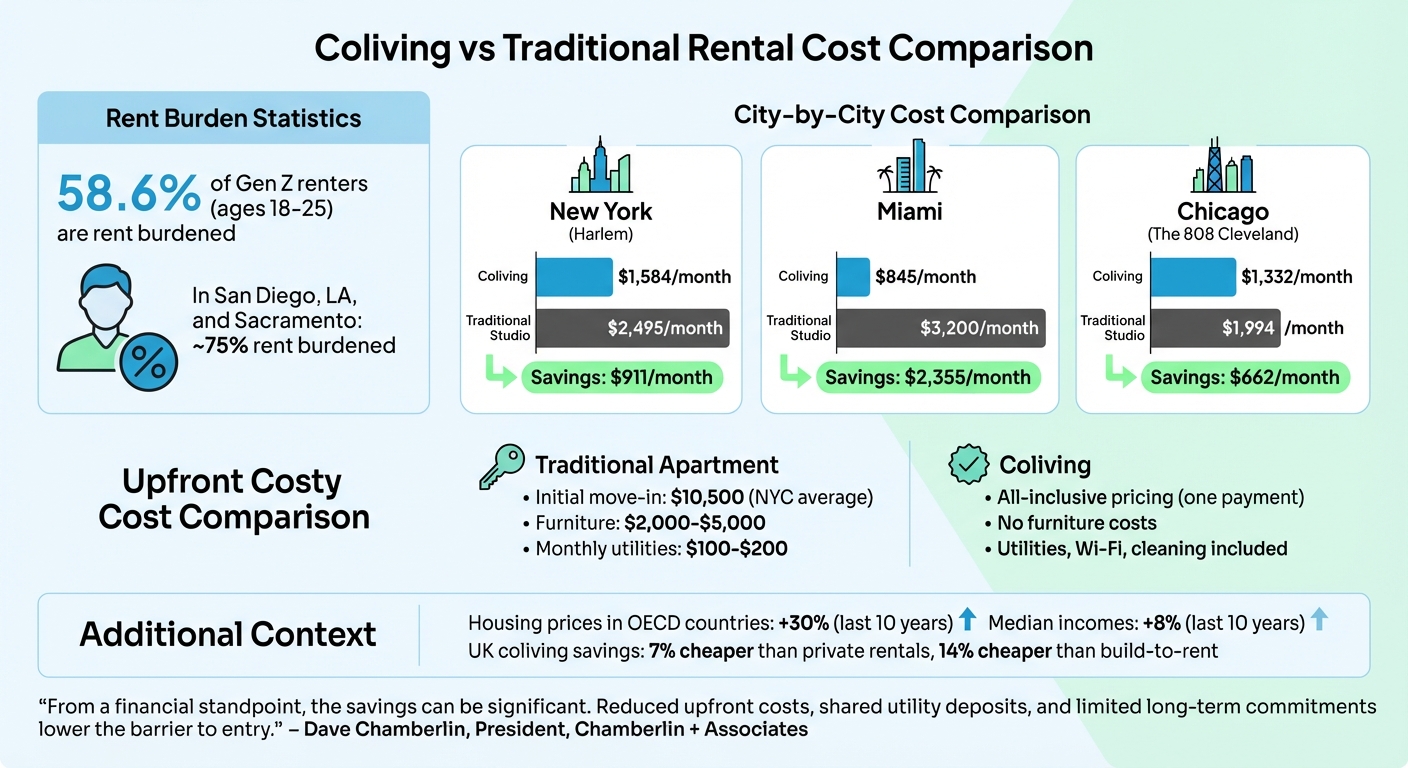
Coliving Cost Savings Comparison: Major US Cities vs Traditional Rentals
Financial Challenges Facing Younger Generations
The numbers paint a clear picture: 58.6% of Gen Z renters aged 18 to 25 are classified as "rent burdened", meaning they spend over 30% of their income on housing. In cities like San Diego, Los Angeles, and Sacramento, this figure skyrockets to nearly 75%, severely impacting financial security.
"Rent burden makes it a struggle for these young adults to afford the other expenses in their lives – things like student loans and medical payments. It's deeply damaging to their ability to save for future life goals." - Kenny Lee, Senior Economist, StreetEasy
The situation is compounded by daunting upfront costs. For instance, renting in New York City can demand an average of $10,500 in initial expenses for traditional leases. Meanwhile, housing prices in OECD countries have surged by 30% over the past ten years, while median incomes have only grown by 8%. These trends are pricing young professionals out of the market, leaving them with few viable options.
This financial strain is fueling interest in more affordable and sustainable housing alternatives, like coliving.
Cost Savings in Coliving Arrangements
Coliving has emerged as a practical solution to the housing affordability crisis, offering meaningful cost reductions. For example, at The Reserve in Harlem, fully furnished coliving rooms start at $1,584, significantly lower than the average studio rent of $2,495. In Miami, the difference is even more striking - private coliving rooms can cost as little as $845, compared to nearly $3,200 for a typical studio.
One of coliving's biggest advantages is its all-inclusive pricing model. Traditional apartments often require $2,000 to $5,000 upfront for furniture and an additional $100 to $200 per month for utilities. Coliving spaces bundle everything - furniture, utilities, Wi-Fi, and cleaning services - into a single, predictable payment. At The 808 Cleveland in Chicago, coliving units start at $1,332, compared to $1,994 for private studios in the same building.
"From a financial standpoint, the savings can be significant. Reduced upfront costs, shared utility deposits, and limited long-term commitments lower the barrier to entry." - Dave Chamberlin, President, Chamberlin + Associates
Another key benefit is flexibility. Month-to-month leases allow young professionals to avoid the financial risks of being locked into long-term agreements. This flexibility provides a level of financial freedom that traditional housing options simply can't match.
Lifestyle Priorities: Community, Flexibility, and Minimalism
Building Social Connections in Modern Life
Feeling lonely isn't uncommon - about 40% of Millennials report experiencing it. Coliving spaces tackle this issue head-on by creating environments designed for connection. Shared kitchens, lounges, and coliving and coworking spaces naturally bring people together, fostering face-to-face interactions that are often missing in urban life.
Community managers take it a step further by organizing events like group dinners, movie nights, and workshops. These gatherings help residents bond effortlessly, forming a supportive network that’s especially helpful for those new to a city. In this way, coliving doesn’t just provide a roof over your head - it builds a sense of belonging, making urban living feel less isolating and more fulfilling.
Flexible Housing for Mobile Lifestyles
With urban professionals switching jobs and homes roughly every 20 months, sticking to traditional 12-month leases doesn’t always make sense. Coliving offers a smarter alternative with month-to-month or short-term contracts, some as brief as three months. This flexibility allows residents to adapt quickly to new opportunities without being tied down by hefty lease penalties.
What makes it even easier? Fully furnished spaces that come with utilities, internet, and cleaning services included. You can move in with just a suitcase - no need for the hassle of buying furniture or setting up services. This streamlined, minimalist lifestyle appeals to those who value experiences over accumulating possessions. Instead of owning appliances or tools, residents can simply share these resources, cutting down on clutter and costs.
Tech-savvy features like online booking, virtual tours, and on-demand maintenance make the process even smoother, catering perfectly to the needs of a fast-moving, digitally connected generation. Coliving, with its focus on flexibility and simplicity, fits seamlessly into the rhythm of modern urban life.
Remote Work and Digital Infrastructure
How Remote Work Enables Location Independence
Remote work has given Millennials and Gen Z the freedom to prioritize lifestyle over location. By eliminating the need to commute to an office, they can explore new cities, live closer to loved ones, or immerse themselves in different experiences - all while maintaining their careers.
Coliving spaces are tailor-made for this on-the-move lifestyle. Unlike traditional apartments, which often require setting up utilities and furniture, coliving spaces come fully equipped. High-speed internet and ergonomic workstations are ready to use, making it easy to transition between cities. This setup not only removes the hassle of moving but also allows residents to dive into new communities without skipping a beat.
Programs like WiFi Tribe take this concept to the next level. They organize "chapters" where groups of remote professionals relocate to a new destination every four weeks. Each location is thoughtfully prepared with reliable workspaces and stable internet, ensuring participants stay productive while exploring the world. This approach resonates with a generation that values flexibility and adventure.
The combination of remote work and choosing a coliving space for a productive workation makes coliving an attractive option for a mobile generation looking for both community and convenience.
Digital Amenities in Coliving Spaces
To keep up with the demands of remote work, coliving spaces are equipped with robust digital infrastructure designed to maximize productivity. Most properties offer enterprise-grade fiber-optic internet with backup systems, ensuring smooth work operations even during outages. Coworking areas are outfitted with ergonomic desks, ample power outlets, and meeting rooms tailored for focused work. For video calls or private discussions, residents can use soundproof pods or quiet zones, ensuring professional-quality interactions without disrupting others.
Many coliving spaces also incorporate smart technology, such as Tapkey for digital access. Instead of juggling physical keys, residents use mobile credentials that can be updated or revoked instantly - a perfect match for flexible leasing arrangements. Plus, 24/7 access to work areas means residents can meet deadlines or take calls across time zones without constraints.
These features align perfectly with the values of flexibility, productivity, and convenience, making coliving a seamless choice for those embracing a location-independent lifestyle.
Environmental Consciousness and Shared Resources
Coliving isn't just about affordability or community - it also aligns with the environmental priorities of today’s residents.
Lower Environmental Impact Through Shared Living
By design, coliving spaces reduce environmental impact through shared resources. For instance, instead of ten residents owning separate washing machines, they might share a single high-efficiency unit. This simple shift reduces the manufacturing footprint. The same logic applies to shared heating, cooling, and water systems, which eliminate redundant energy use. In fact, shared infrastructure in coliving setups can cut energy usage by 30%, water consumption by 20%, and waste production by 23% compared to traditional apartments.
Take The Collective Old Oak in London, for example. It earned a BREEAM "Excellent" sustainability rating thanks to its eco-friendly construction and shared resource model - all while maintaining a 98% occupancy rate. Similarly, at WeLive's Wall Street location in New York City, shared systems and smart technology led to a 20% reduction in energy costs during the first year.
Waste reduction is another natural benefit of coliving. The Collective Canary Wharf, for instance, partnered with initiatives like Too Good To Go and introduced on-site composting systems, slashing organic waste by 40%. Shared kitchens also encourage bulk purchasing, cutting down on packaging waste. AI-driven thermostats, which adjust to actual occupancy, further reduce energy waste by about 15%.
Modern coliving spaces also embrace sustainable construction materials, green roofs, and strategic locations near public transit. Many even offer EV charging stations and bike-share programs to minimize their environmental footprint further.
Matching Generational Priorities
Millennials and Gen Z have grown up witnessing the effects of climate change and expect their living spaces to reflect their environmental values. Coliving meets these expectations without compromising on comfort or convenience. Shared living takes care of eco-conscious choices automatically - residents don’t need to worry about researching green technologies or investing in energy-efficient appliances because the infrastructure is already optimized.
"Our properties use 30% less energy per resident compared to traditional apartments while maintaining an average occupancy rate of 97%." - Common, a coliving operator in New York
This eco-friendly approach resonates with younger generations who prioritize sustainability alongside affordability and community. Coliving provides a seamless way to live responsibly while enjoying the benefits and challenges of a modern, flexible lifestyle. It’s a practical solution for a generation that values both environmental stewardship and convenience.
The Future of Coliving
Millennials and Gen Z are reshaping the housing market with their demand for affordable, flexible, and community-focused living spaces. These preferences are driving the rapid growth of coliving, a trend that’s redefining urban housing to better suit their needs.
In the UK, coliving planning applications surged by 87% in 2024 compared to the previous year. Meanwhile, India's coliving market is on track to hit 1 million beds by 2030, fueled by the younger population. Beyond major hubs like London and New York, coliving is now expanding into secondary markets and areas near hospitals or industrial centers, bringing this lifestyle option to an even broader audience.
"Co-living, which caters to single-person households, can help ease the strain on housing supply and its subsequent impact on other renters, such as families." – Kirsten Dyer, Senior Director, CBRE
Looking ahead, technology is set to play a pivotal role in shaping coliving spaces. Imagine voice-activated controls, AI tools to foster community engagement, and biophilic designs like living walls and indoor gardens, all aimed at enhancing mental well-being. These spaces are also evolving to meet the needs of remote workers, combining affordable living options with coworking amenities such as private offices and collaborative work zones.
The industry is also undergoing a significant transformation behind the scenes. Institutional investors are pouring capital into the sector, while tech providers and consultants are helping refine operational models. Developers are repurposing outdated office buildings into coliving spaces, which not only increases urban housing supply but also reduces carbon emissions through retrofitting - aligning perfectly with Gen Z’s environmental values. On top of that, coliving remains a cost-effective option, being 7% cheaper than traditional private rentals and 14% more affordable than build-to-rent apartments in the UK.
With these advancements, coliving is well-positioned to meet the evolving demands of younger generations, solidifying its place as a go-to housing solution for modern, dynamic lifestyles.
FAQs
What’s the difference between coliving and having roommates?
Coliving provides a professionally managed housing setup where residents enjoy private bedrooms alongside shared common areas. The rent is all-inclusive, covering utilities, amenities, and services like housekeeping. What sets coliving apart is its focus on fostering a sense of community, offering flexibility, and prioritizing convenience.
On the other hand, living with roommates is usually an informal arrangement. It typically lacks professional management or a built-in community aspect. Rules, amenities, and services can vary widely, often without the structured offerings or social atmosphere found in coliving spaces.
What’s usually included in a coliving monthly price?
Coliving monthly costs usually include everything you need: a private bedroom, access to shared areas like kitchens and living rooms, utilities, internet, and often furniture. All of this is combined into one flat fee, offering residents a simple and predictable way to manage their expenses.
How do I know if coliving is a good fit for me?
Coliving could be a great option if you're looking for a balance of affordability, flexibility, and community. It works well for those who enjoy having a private bedroom while sharing common areas, prefer short-term or flexible lease options, and value a sense of connection with others. If you’re open to socializing, sharing amenities, and saving money by splitting expenses, coliving might fit your lifestyle perfectly.