
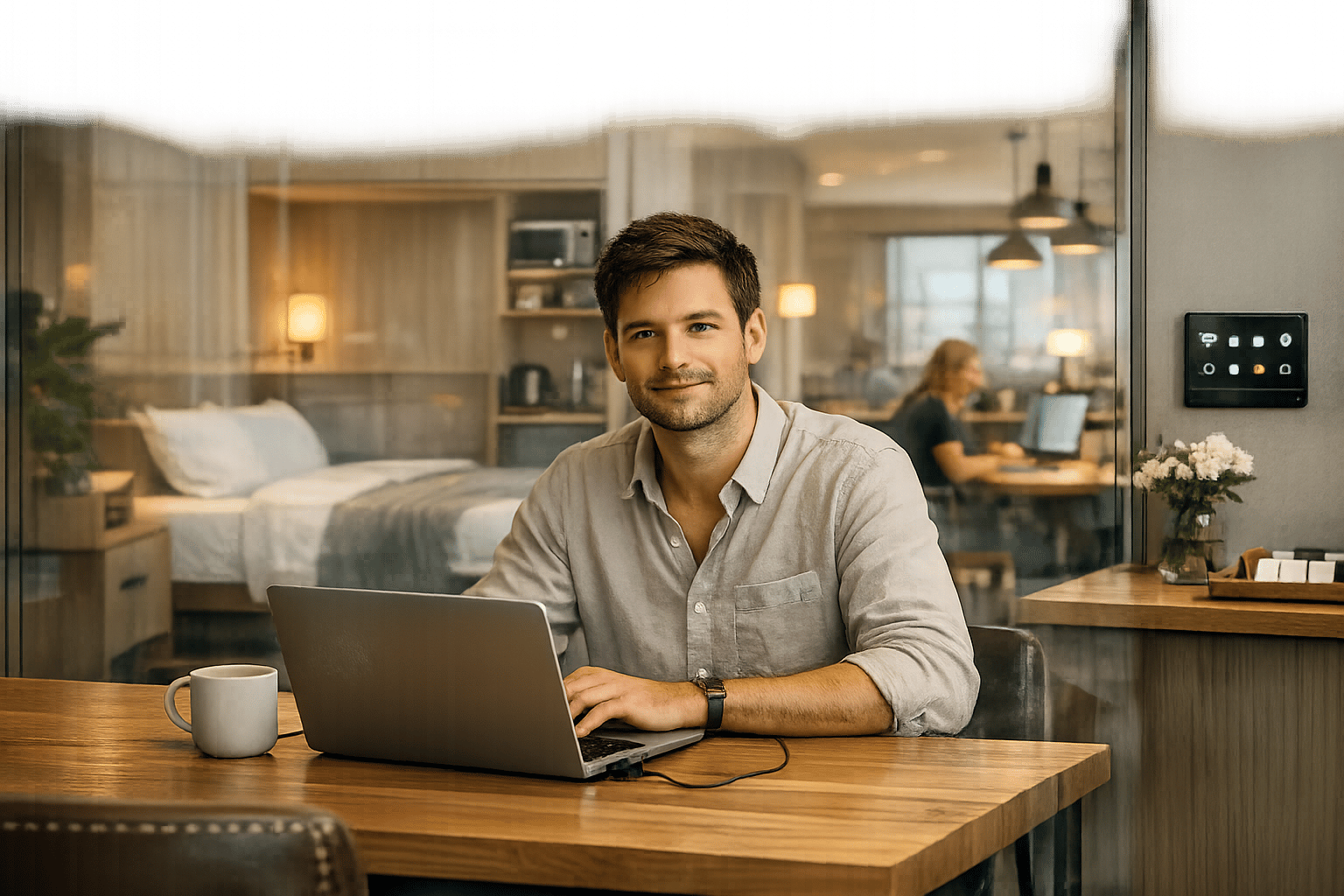
Professional coliving spaces are transforming how people live and work. Designed for remote workers, entrepreneurs, and professionals, these spaces combine private living areas with shared amenities like coworking zones, gyms, and community spaces. They offer convenience with flexible leases, all-inclusive pricing, and services like housekeeping and high-speed internet.
Key takeaways:
- Convenience: Move-in-ready spaces with furniture, utilities, and Wi-Fi included.
- Community: Shared areas and events foster connections without the isolation of renting alone.
- Work-Friendly: Soundproof workspaces, ergonomic furniture, and fast internet cater to remote professionals.
- Flexibility: Month-to-month leases make it easy to live in different cities or test new locations.
Operators are also improving services with hotel-style amenities, smart technology, and tailored options for diverse groups, including families and older adults. Whether you’re a digital nomad or a single parent, these spaces offer a practical alternative to traditional housing.
Better Amenities and Services in Modern Coliving
Modern coliving spaces have stepped up their game, offering amenities that rival those of high-end apartments. Think weekly housekeeping, fully equipped gyms, yoga studios, and even meditation lounges - all included in one flat monthly fee. This fee covers rent, utilities, Wi-Fi, and cleaning, making budgeting a breeze. Plus, with professional management teams handling maintenance requests 24/7, residents can focus on their lives without the hassle of day-to-day upkeep. These spaces are also designed with work in mind, ensuring professionals have everything they need to stay productive.
Wellness facilities have become a key feature, helping residents maintain a balanced lifestyle. On-site gyms save time by eliminating the need to travel to a fitness center, while yoga and meditation spaces offer a chance to recharge during a busy day. These amenities don’t just promote healthier habits - they actively enhance overall well-being. As Gravity Co puts it:
"The advantages to personal and professional lives with a balanced lifestyle are endless. Our tailored activities and on demand services enable our members to enhance and correct their balance, helping unleash all our members true potential."
These wellness-focused spaces also help residents draw clear lines between work and relaxation, reducing the risk of burnout. A study by French coliving operator La Casa found that 95% of residents across more than 50 communities reported feeling less lonely after moving in. This highlights how shared spaces - from communal kitchens to rooftop lounges - and group activities like fitness sessions foster meaningful connections with housemates.
Living Spaces Designed for Work
Beyond wellness, modern coliving spaces are tailored to meet the needs of remote workers. Features like soundproof private workspaces, ergonomic furniture, and high-speed Wi-Fi are now standard. Many properties also offer quiet zones for video calls, standing desks, and proper lighting to ease eye strain during long work hours.
These thoughtfully designed workspaces cater to professionals who need a productive environment. Adjustable desks, monitor arms, and acoustic panels help create a focused atmosphere, free from the distractions of a noisy coffee shop or cramped bedroom. By providing these purpose-built areas, coliving spaces make it easier to separate work life from personal time, even when they share the same address.
Building Community Through Shared Spaces
Shared spaces are the heartbeat of professional coliving communities. Lounges, fully stocked kitchens, and outdoor terraces naturally bring people together, encouraging connections without the pressure of formal networking events. Whether it’s cooking dinner with a fellow resident or joining an impromptu game night, these communal areas foster authentic interactions.
Professional management ensures these spaces remain welcoming and harmonious, with clear rules around noise and guest policies. As Romane F. shared:
"The atmosphere here promotes both productivity and relaxation, which is perfect for someone like me who values balance."
Combining Coworking and Coliving Under One Roof
Professional coliving has taken a step forward by merging coworking spaces with living accommodations under one roof. This setup eliminates the need for daily commutes, creating a smooth flow between work and personal life. With an all-inclusive monthly fee - typically ranging from $990 to $1,700 - residents enjoy convenience and simplicity.
This model addresses the isolation often felt by remote workers. When both your living and working environments are designed with professionals in mind, you're surrounded by people who share similar challenges and goals. Casual conversations in shared workspaces can lead to meaningful collaborations, whether it's exchanging feedback on projects or discovering new business opportunities. By removing the stress of commuting and blending work with life, this approach boosts both productivity and community engagement.
Flexible Work Areas for Remote Professionals
Today's coliving-coworking spaces go far beyond basic setups. They now feature top-notch infrastructure, including high-speed internet with symmetric speeds of up to 1 Gbps. For instance, Zeta House in Austin, Texas, offers WiFi 6E coverage throughout its property, ensuring smooth video calls and quick file transfers.
These spaces also include amenities you won’t find in traditional apartments. Think quiet zones for focused work, fully equipped meeting rooms with smart TVs and whiteboards, and 24/7 access to fit any schedule. The all-inclusive pricing model simplifies budgeting by bundling rent, coworking access, utilities, and amenities into one flat monthly fee. These features cater to the evolving needs of remote professionals, providing a seamless work-life experience.
Global Examples of Coliving-Coworking Spaces
Around the world, integrated coliving-coworking spaces are thriving. Take Noma Village in Lagos, Portugal, for example. It has welcomed 126 guests from 21 countries, offering private rooms with ensuite bathrooms and 500 Mbps fiber internet for as little as €990 per month. Residents love the balance between productivity and the coastal lifestyle, earning the property a 4.8/5 rating on Google.
"Perfect balance of work and Portuguese coastal life. I've never been more productive while enjoying such an amazing lifestyle."
In Austin, Texas, Zeta House caters to tech professionals with 1 Gbps symmetric internet and dedicated workspaces, creating an environment where productivity feels effortless.
"At Zeta House, our coworking office seamlessly integrates with our coliving environment... this is the place where work feels effortless and growth happens naturally."
In Sofia, Bulgaria, WorkNomads Lab combines coworking spaces with city views and a rooftop restaurant, making it a hotspot for digital nomads seeking both productivity and community.
Even remote destinations are embracing this trend. Alpiness in Les Haudères, Switzerland, offers a haven for mountain enthusiasts who want to ski or hike between work sessions. Meanwhile, Nine Coliving in Tenerife, Spain, operates from a historic Canarian house, promoting meaningful connections and a slower pace of life. These examples show that the coliving-coworking model is not limited to urban centers - it’s expanding to meet remote workers wherever they want to live, offering the perfect mix of convenience, connection, and adaptability for modern professionals.
Who Lives in Professional Coliving Spaces Today
Modern coliving spaces have evolved to welcome a wide range of residents, thanks to thoughtful amenities and a focus on building community. These spaces are no longer just for young professionals or digital nomads - they now attract single parents, expatriates, and even professionals in their 30s. The appeal lies in the combination of flexibility, convenience, and a sense of belonging.
Take France, for example. With single-parent families making up 1 in 4 households, the need for family-friendly coliving has grown. In late 2023, Commune launched a groundbreaking coliving space in Poissy, France, tailored specifically for single-parent families. This facility accommodates 14 families, offering private units with kitchenettes and bathrooms, alongside shared spaces like playrooms for kids and a cozy bar for parents. The design tackles a pressing issue - 83% of mothers under 30 report feeling lonely. Spaces like these provide much-needed community support.
"Spatially and architecturally, we have translated this into living spaces that encourage encounters and break the vicious circle of loneliness, while preserving the privacy of single parents and their children." - Tara Heuzé-Sarmini, Co-founder, Commune
Coliving operators are also trying out intergenerational housing models, mixing young professionals with active seniors. Urban Campus, for instance, has introduced multifamily complexes in Marseille and Saint-Louis, France, designed to accommodate diverse groups, including families. These spaces offer tailored amenities, from child-friendly features to wellness zones for older adults, reflecting the varied needs of residents at different life stages.
Private Micro-Studios for More Privacy
As coliving evolves, private micro-studios are becoming a must-have. Professionals in their 30s, in particular, value the balance of community living with personal space. These studios typically include private bedrooms and en-suite bathrooms, giving residents a retreat while staying connected to the larger community.
This approach also addresses the isolation that can come with remote work. While coliving provides a built-in social network, it's equally important for residents to control their level of interaction. Some platforms even use AI matching to pair compatible roommates, reducing conflicts and fostering a more harmonious environment.
Events Designed for Different Resident Groups
To cater to diverse resident needs, spaces like Commune incorporate thoughtful design elements. For example, they feature kid-friendly touches like low doors and hidden entrances, alongside distinct zones for children, adults, and families. These intentional designs and curated events ensure that coliving spaces remain welcoming and functional for everyone.
Technology and Automation in Coliving Operations
Professional coliving spaces are increasingly relying on technology to simplify operations and enhance the resident experience. From smart locks to AI-driven maintenance systems, automation is transforming how these spaces function. This tech-first approach minimizes hassles for both residents and operators, creating a smoother, more efficient living environment.
Smart Home Features and Automated Maintenance
Smart locks have become a staple in coliving spaces, replacing traditional keys with mobile-based access synced to lease dates. Residents can unlock doors with their smartphones, while operators manage access remotely, eliminating the need for on-site staff at every check-in. Some spaces even incorporate facial recognition for added security and convenience.
Predictive maintenance is another game-changer. IoT sensors in HVAC systems, plumbing, and appliances can detect potential issues before they escalate. This approach reduces repair costs by 30% and cuts downtime by 45%, ensuring fewer disruptions for residents. No more waiting days for a broken air conditioner to be fixed!
Take UrbanNest London, for example. This mid-size operator managing 220 beds implemented AI-driven systems in 2024. Within six months, they slashed maintenance costs from £72,000 to £54,000 and improved response times from 12 hours to just 2 minutes. Occupancy jumped from 82% to 95%, adding £72,000 in annual revenue. The key? A combination of integrated chatbot support and predictive maintenance.
On-demand services are also becoming the norm. Residents can book housekeeping, linen changes, or repairs directly through their phones. This "hotel-like" convenience is especially appealing to busy professionals who value their time.
Streamlined Booking and Management Platforms
Booking a coliving space has gone fully digital. Platforms like Coliving.com let users browse spaces in over 380 cities, sign rental agreements, and review transparent pricing - all online. This seamless process aligns perfectly with the flexible, all-inclusive lifestyle professionals are seeking.
On the operational side, property management systems like ColivHQ and Re-Leased are automating routine tasks. These platforms handle everything from lease management to repair scheduling and financial reporting, allowing staff to focus on community-building efforts. For instance, Casa Mia Coliving scaled to 400 units using ColivHQ, achieving a Net Promoter Score of 40 during their growth - a clear sign that efficiency doesn’t have to compromise resident satisfaction.
AI-based pricing tools like PriceLabs also play a vital role. By analyzing historical data and local demand trends, these tools adjust rental rates in real-time, boosting revenue by 3–7% and improving occupancy by 10–15%. For residents, this means fair and transparent pricing that reflects current market conditions. For operators, it’s a way to remain competitive without the constant need for manual updates. By automating these tasks, operators can shift their focus to fostering a sense of community, which remains at the heart of coliving. For those new to the concept, understanding what coliving is and how it has evolved is essential for navigating these modern housing options.
Traditional Housing vs. Professional Coliving
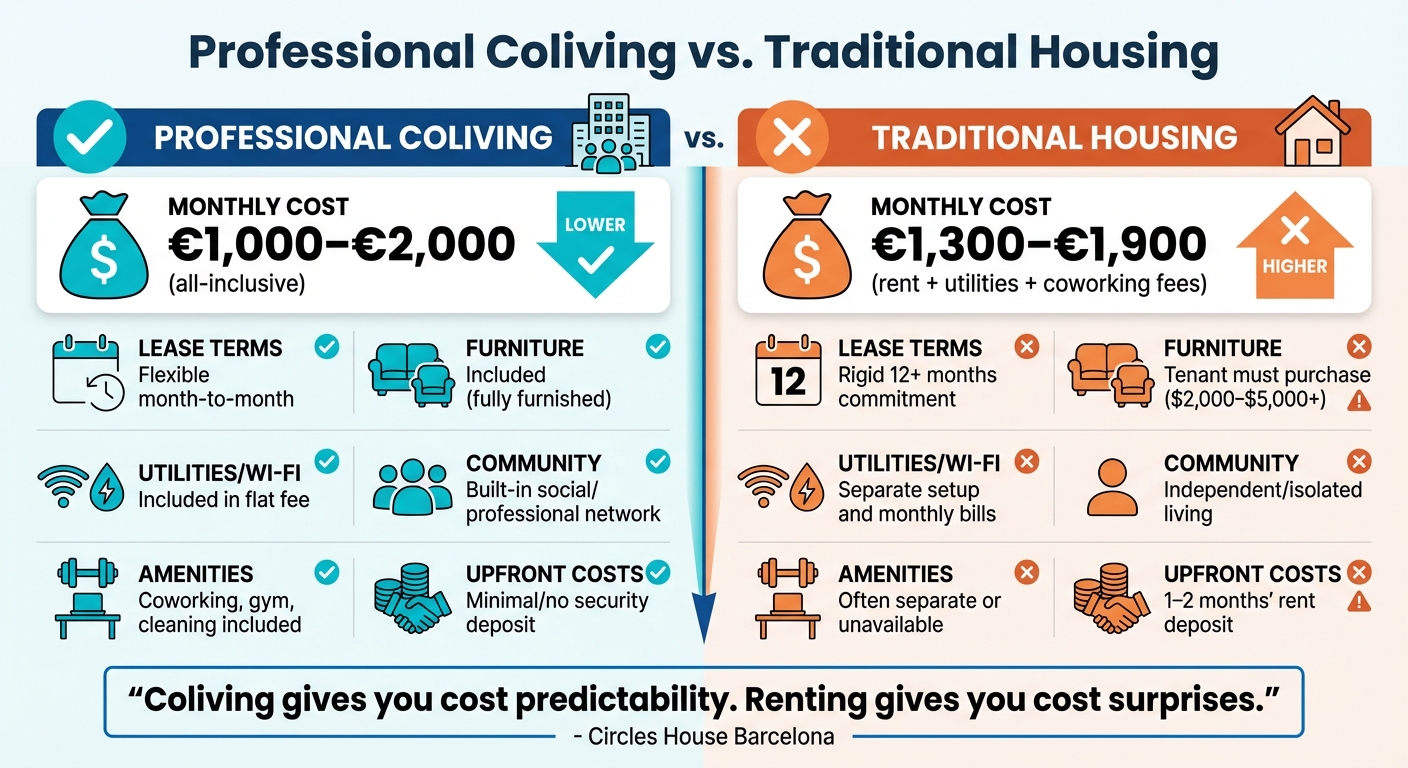
Professional Coliving vs Traditional Housing: Cost and Features Comparison
When comparing traditional renting with professional coliving, the differences come down to costs, flexibility, and lifestyle. Renting a traditional apartment often means a hefty upfront investment: security deposits equal to 1–2 months of rent, furniture expenses ranging from $2,000–$5,000, and separate fees for setting up utilities. On the other hand, coliving spaces simplify the process with fully furnished rooms and little to no deposit required, making move-in quick and hassle-free.
Monthly expenses also paint a clear picture. Take Barcelona, for example: coliving spaces cost €1,000–€2,000 per month, covering rent, utilities, and amenities in one flat fee. Traditional housing, however, typically costs €1,300–€1,900 when you factor in rent, utilities, and coworking space fees. The standout feature of coliving? Cost predictability. With everything bundled, there are no surprise bills. Traditional renting, by contrast, often involves juggling fluctuating utility costs and other variable expenses.
"Coliving gives you cost predictability. Renting gives you cost surprises." - Circles House Barcelona
Lease terms are another game-changer. Traditional rentals usually require a 12-month (or longer) commitment, which can be restrictive for professionals who move frequently. Coliving spaces, however, offer flexible month-to-month leases, perfect for those testing out a new city or embracing a more mobile lifestyle. Want to stay three months and move on? No problem - no penalties.
| Factor | Professional Coliving | Traditional Housing |
|---|---|---|
| Monthly Cost | Lower (all-inclusive) | Higher (rent + separate bills) |
| Lease Terms | Flexible (month-to-month) | Rigid (12+ months) |
| Furniture | Included (fully furnished) | Tenant must purchase ($2,000–$5,000+) |
| Utilities/Wi-Fi | Included in flat fee | Separate setup and monthly bills |
| Community | Built-in social/professional network | Independent/isolated living |
| Amenities | Coworking, gym, cleaning included | Often separate or unavailable |
| Upfront Costs | Minimal/no security deposit | 1–2 months' rent deposit |
This comparison highlights why coliving is becoming a go-to choice for modern professionals.
Why Coliving Fits Modern Professional Lifestyles
Coliving isn’t just about saving money - it’s about meeting the needs of today’s workforce. Professionals, especially remote workers and digital nomads, require more than a bed and a roof. They need spaces designed to support their work and lifestyle. Traditional apartments rarely offer features like coworking areas, reliable high-speed internet, or opportunities to network. Coliving spaces, however, are purpose-built with these needs in mind, combining work-friendly environments with a ready-made community.
The social aspect is another major draw. Moving to a new city can be isolating, especially when starting from scratch socially. Coliving spaces bridge this gap by organizing networking events, workshops, and casual gatherings. These events help residents form both personal and professional relationships naturally - something that traditional housing simply doesn’t provide.
And then there’s the convenience factor. For professionals who value time over chores, coliving is a game changer. Forget about calling a plumber, setting up internet, or shopping for furniture. With everything taken care of, residents can focus on their careers and personal goals instead of worrying about home maintenance. For high-earning professionals who see time as their most precious resource, this convenience is hard to beat.
What's Next for Professional Coliving
Professional coliving is stepping up from simple shared housing to a more refined model that merges hospitality with modern living. A major development is the incorporation of hotel-style services for mid-term stays (1–3 months), all accessible through user-friendly mobile apps. These services build on previous improvements in amenities, pushing the boundaries of convenience and connectivity.
Technology is also playing a pivotal role in transforming coliving operations. Integrated Property Management Systems now connect with smart locks, maintenance platforms, and IoT sensors. These tools automate tasks like scheduling cleanings, adjusting climate controls, and managing resources. As Doinn Blog aptly notes:
"The era of managing 500 beds on Excel is over. The 'flight to quality' means that inefficient operators will be bought out or pushed out."
Design trends are shifting too. Dorm-style arrangements are giving way to micro-studios equipped with private bathrooms and kitchenettes. Today’s professionals want a balance: privacy when they need it and community when they want it. Developments like The Cloud One Hotel & Residences Wynwood in Miami are setting the standard by offering coworking spaces with private conference rooms exclusively for residents. This approach reflects the growing demand for both personal space and shared experiences.
Sustainability and quality are now non-negotiables for institutional investors. Properties are expected to provide digital audit trails, follow standardized procedures, and meet ESG compliance requirements. This includes ensuring reliable WiFi, documenting deep-cleaning schedules, and tracking carbon footprints across portfolios. These measures align with the expectations of modern professionals who prioritize flexibility and convenience.
Discover the future of professional living with Coliving.com. Starting at just $100 per month, explore over 1,900 fully furnished coliving spaces across 380 cities in 70+ countries. Compare options, read reviews, and book online with ease - complete with a money-back guarantee and hassle-free cancellation.
FAQs
What’s usually included in a professional coliving monthly fee?
A professional coliving monthly fee typically includes everything you need for a comfortable and convenient living arrangement. This usually covers a furnished private or shared room, utilities like electricity, water, and gas, high-speed Wi-Fi, and regular cleaning of shared spaces. The goal is to make life easier by bundling these essentials, so you can enjoy a hassle-free experience.
How private are micro-studios compared to shared-room coliving?
Micro-studios provide a level of privacy that's hard to match in shared-room coliving setups. These units are fully self-contained, offering private sleeping, living, and kitchen spaces, which means you have complete control over your environment. On the other hand, shared-room coliving involves private bedrooms within a larger shared apartment or house. While you get your own bedroom, spaces like the kitchen and living room are communal.
Micro-studios are perfect for those who value personal space and independence, whereas shared-room coliving is better suited for people who enjoy community and social connections.
What should I look for in coliving Wi-Fi and workspaces for remote work?
When searching for the perfect workspace, prioritize fast and reliable Wi-Fi that can support multiple devices simultaneously. Look for areas equipped with dedicated workspaces tailored for productivity. Features like ergonomic furniture, ample natural light, and quiet zones are essential to reduce distractions and create an environment that supports effective remote work.