
Looking to work remotely while keeping costs low? Here are 10 cities where you can live comfortably for under $1,500/month. These destinations offer affordable housing, fast internet, and active communities for remote workers. From Southeast Asia to Europe and Latin America, each location provides a unique mix of lifestyle and budget-friendly options.
Key Highlights:
- Chiang Mai, Thailand: Costs $900–$1,200/month. Known for affordable apartments ($300–$500), $1 street food, and vibrant nomad meetups.
- Bangkok, Thailand: $1,300/month. Modern city living with rents starting at $400 and excellent public transport.
- Tbilisi, Georgia: $900–$1,300/month. Visa-free for 365 days, with $350–$550 rentals and cheap public transport.
- Yerevan, Armenia: $850–$1,250/month. Compact city with $300–$500 apartments and $1 taxi rides.
- Bali, Indonesia: $1,100–$1,400/month. Affordable warung meals ($1.50–$3) and coworking spaces.
- Da Nang, Vietnam: $800–$1,200/month. Beach city with $250 rentals and $0.80 meals.
- Mexico City, Mexico: $1,200–$1,450/month. Vibrant culture, $450 apartments, and $0.25 metro rides.
- Medellín, Colombia: $1,100–$1,400/month. Eternal spring weather, $400 rentals, and $3 lunches.
- Athens, Greece: $1,300–$1,500/month. Mediterranean charm with $500 apartments and $30 public transport passes.
- Budapest, Hungary: $1,400–$1,475/month. European capital with $540 rentals and $65 coworking spaces.
Quick Comparison Table:
| City | Monthly Budget | Rent (1-BR) | Coworking | Internet Speed | Key Feature |
|---|---|---|---|---|---|
| Chiang Mai | $900–$1,200 | $300–$500 | $80–$120 | 200–500 Mbps | Low costs, big community |
| Bangkok | $1,300 | $400–$650 | $100–$160 | 200–500 Mbps | Modern amenities |
| Tbilisi | $900–$1,300 | $350–$550 | $70–$110 | 20–100 Mbps | Long visa stay |
| Yerevan | $850–$1,250 | $300–$500 | $65–$100 | 10–60 Mbps | Compact, walkable |
| Bali | $1,100–$1,400 | $400–$700 | $90–$180 | 50–150 Mbps | Wellness-focused |
| Da Nang | $800–$1,200 | $250–$400 | $60–$100 | 50–100 Mbps | Beach lifestyle |
| Mexico City | $1,200–$1,450 | $450–$750 | $100–$150 | 50–100 Mbps | Vibrant culture |
| Medellín | $1,100–$1,400 | $400–$650 | $90–$140 | 100–300 Mbps | Entrepreneurial vibe |
| Athens | $1,300–$1,500 | $500–$800 | $85–$130 | 50–500 Mbps | Mediterranean living |
| Budapest | $1,400–$1,475 | $540–$810 | $65–$150 | Top 10 globally | European affordability |
These cities combine affordability with everything you need to thrive as a digital nomad. Using the right productivity tools for nomads can help you maintain your workflow while exploring these affordable destinations. Whether you prefer beaches, mountains, or city life, there's a destination for you.
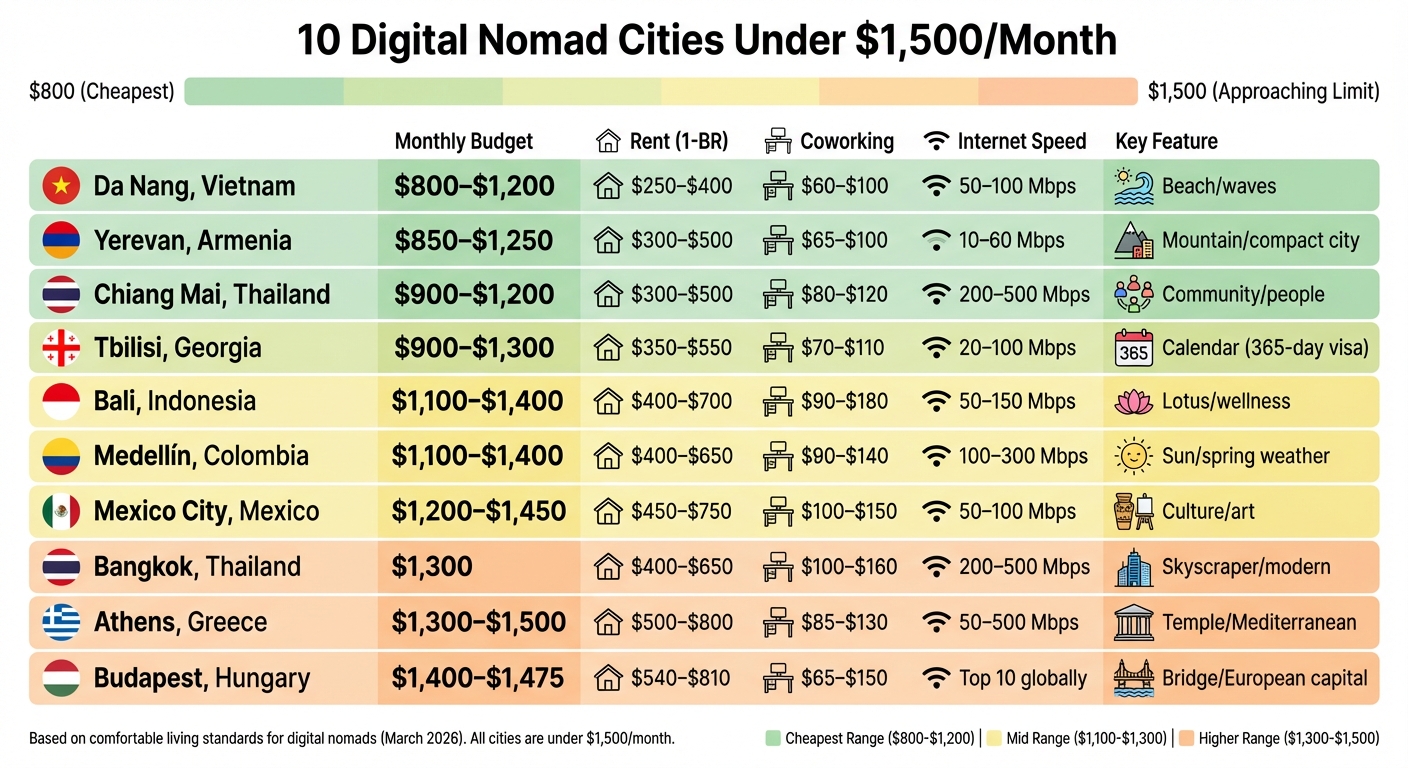
Digital Nomad Cities Cost Comparison: Monthly Budget Breakdown Under $1,500
1. Chiang Mai, Thailand
Affordability (under $1,500/month)
Chiang Mai is a favorite among digital nomads for its affordability, with an average monthly cost of $1,257. If you're looking for a place to stay, studios or one-bedroom apartments in popular areas like Nimman or the Old City range from $300 to $500 per month - a fraction of what you'd pay in the U.S. For those who prefer a minimalist lifestyle, monthly expenses can be as low as $611, while a more comfortable setup with a modern condo, pool access, and dining out regularly hovers around $1,070.
Daily living costs are equally reasonable. Street food meals are priced at just $1–$2, and even mid-range restaurant meals fall between $2 and $7. Renting a scooter costs about $70–$100 per month, and you can enjoy a Thai massage for $9–$12 per hour. High-speed internet (200–500 Mbps) is incredibly affordable, costing only $15–$25 monthly, while bi-weekly apartment cleaning services average around $50 per month. As YouTuber Paddy Doyle puts it:
"It's walking distance to my favorite coffee shop, and still cheaper than my student flat back in the UK."
Active Expat/Digital Nomad Community
Chiang Mai has one of the most vibrant digital nomad communities in the world. Weekly meet-ups, networking events, and social gatherings are common, often organized through coworking spaces or the "Chiang Mai Digital Nomads" Facebook group. This group is a go-to resource for finding housing, meeting fellow nomads, and staying in the loop on local happenings. Beyond the community, the city's 300+ temples add a rich cultural dimension, while expats often gather at places like the North Gate Jazz Club or Sunday Night Market for more relaxed socializing. The strong sense of connection here makes it easy to find your tribe.
Availability of Coworking Spaces
Chiang Mai has no shortage of top coliving spaces and coworking options, featuring well-known spaces like Punspace, Yellow Coworking, and CAMP (located inside Maya Mall). Monthly memberships are reasonably priced, ranging from $50 to $120. If you prefer a more casual work environment, the city's thriving cafe culture is perfect for setting up your laptop and getting things done. Paulo from Nomad Pathways shares his experience:
"Internet quality was one of my biggest concerns before arriving and Chiang Mai delivered."
Quality of Life (safety, amenities, and culture)
Chiang Mai is known for being one of the safest cities for solo travelers and digital nomads, with low crime rates and welcoming locals. Healthcare is accessible and affordable, with private GP consultations costing just $14–$22. However, the "burning season" from February to April is a notable downside, as the air quality takes a hit. Many nomads plan ahead by spending this time on the Thai islands. For longer stays, Thailand's 30-day visa-exempt entry can be extended for an additional 30 days at immigration offices, offering flexibility for those who want to stick around.
2. Bangkok, Thailand
Affordability (under $1,500/month)
Bangkok delivers modern comforts at a fraction of what you'd spend in the West. Digital nomads can live comfortably here for $1,000 to $1,500 per month. The trick lies in picking the right neighborhood or coliving spaces in Bangkok. For instance, Ari offers a quieter, trendy vibe with rents starting around $400, while On Nut combines affordability with convenient BTS Skytrain access. To save even more, consider renting directly from local landlords through platforms like DDProperty or Hipflat, which can slash costs by 30–50%.
Daily expenses are also impressively low, thanks to Bangkok's street food culture. Meals from street vendors cost just $1.50–$3, and shopping at fresh markets like Khlong Toei can keep your monthly grocery bill between $200 and $300. High-speed fiber internet (200–500 Mbps) costs $18–$40 per month, and utilities for a studio apartment average $55–$90, depending on air conditioning use. Public transport is another budget-friendly perk - BTS or MRT rides start at about $0.50, with monthly passes available for $30–$50. This affordability has helped create a vibrant expat and digital nomad scene.
Active Expat/Digital Nomad Community
Bangkok is a melting pot of corporate expats, digital nomads, retirees, and creatives. The Sukhumvit area - particularly Thonglor, Ekkamai, and Asoke - is the hub for expats, offering international dining options and regular networking events. Joining Facebook groups like Bangkok Digital Nomads and Bangkok Expats (each with hundreds of thousands of members) is a great way to find housing, meet people, and stay updated on local happenings.
As described by WhereNext:
"Bangkok is controlled chaos at its finest - a city of 11 million people where ancient temples share skyline space with gleaming skyscrapers." – WhereNext
Availability of Coworking Spaces
Bangkok's coworking scene is well-established, catering to a variety of needs. Popular spaces include True Digital Park (great for tech enthusiasts), The Hive (stylish and chic), Hubba (a long-time favorite), and JustCo (known for flexibility). Monthly memberships range from $80 to $200, and day passes are available for $7–$12, letting you try out different spots before committing. Many newer apartment buildings now feature coworking lounges, making it easier than ever to work from home without sacrificing productivity.
Quality of Life (safety, amenities, and culture)
For digital nomads, Bangkok is a generally safe city with top-tier amenities. Private hospitals like Bumrungrad and Samitivej offer excellent care with English-speaking staff, though consultation fees can range from $60 to $150 if you're uninsured. That said, the city's infamous traffic and the intense heat from March to May can be challenging.
Thailand has also introduced the Destination Thailand Visa (DTV) in 2024, which makes long-term stays more accessible. This visa allows remote workers to stay for 180 days per entry over five years, with fees ranging from $270 to $1,000 depending on where you apply. It’s a game-changer for those looking to settle in this dynamic city.
3. Tbilisi, Georgia
Affordability (under $1,500/month)
Tbilisi makes life easy for digital nomads with a visa policy that lets citizens from over 95 countries stay for 365 days without extra paperwork. Living here costs between $900–$1,500 per month, though those on a tight budget can start at around $900. Studio apartments in areas like Saburtalo or Chugureti cost $350–$500, while one-bedroom options range from $600–$900. If you're looking to save, non-touristy neighborhoods are the way to go.
Everyday expenses are just as reasonable. Local favorites like khinkali and khachapuri cost about $3–$6, and monthly groceries typically fall between $200–$300. Public transport is a steal at $0.18–$0.37 per ride, and a Metromoney card (just $0.75) gives you access to the metro, buses, and minibusses. For short trips around town, ride-hailing through Bolt costs $2–$5. Internet is another budget-friendly perk: high-speed fiber (20–100 Mbps) costs $6–$12 per month, and Magticom’s unlimited 4G/5G plans run $10–$13.
Active Expat/Digital Nomad Community
Tbilisi isn’t just affordable - it’s buzzing with a dynamic expat and digital nomad scene. Over the past five years, the city has experienced a 250% rise in popularity among digital nomads, creating a lively, welcoming environment. Crossroads Bar is a hotspot for meeting people, hosting Friday night meetups at 9 PM where both foreigners and English-speaking locals gather. The Vera district and Fabrika creative complex are also popular hangouts where striking up conversations feels natural. For those who prefer a built-in community, many travelers also look for the best coliving spaces in Europe to make the transition easier.
To dive right into the community, check out the "Expats in Tbilisi" Facebook group and local WhatsApp chats for housing tips and events. While the expat scene is diverse and friendly, some nomads say service interactions can feel reserved, and language barriers may crop up outside younger circles. The influx of Russian expats has also added unique social dynamics.
Availability of Coworking Spaces
Tbilisi offers a variety of coworking spaces to suit different needs and budgets. Terminal, the largest coworking chain, has six locations in neighborhoods like Vake and Saburtalo. They provide high-speed internet (50–200 Mbps), soundproof call booths, and 24/7 access for $155–$195 per month. For those interested in networking, Impact Hub Tbilisi at the Fabrika complex is a great choice, with memberships priced between $150–$195. On the more budget-friendly side, Space Z charges $55–$90 monthly and even features mini-golf and hammocks for downtime.
Day passes range from $4 at budget spots to $17 at premium locations like D Block, known for its quiet, library-like setting and sleek design. Before committing to a membership, try a day pass to test the Wi-Fi. If you’re watching your wallet, laptop-friendly cafes like Coffee LAB offer solid internet access for the price of a coffee, making them a great alternative for casual workdays.
Quality of Life (safety, amenities, and culture)
Tbilisi is generally safe, with Georgia ranking 100th out of 163 countries on the Global Peace Index. The city combines ancient charm with modern amenities, offering everything from historic architecture to trendy cafes. Plus, the nearby mountains offer quick, breathtaking getaways. For digital nomads, registering as an "Individual Entrepreneur" is a smart move - it allows you to pay just 1% income tax on earnings up to about $155,000 annually.
That said, there are a few downsides. Traffic can be chaotic, pedestrian infrastructure inconsistent, and air pollution an occasional issue. Crosswalks and sidewalks aren’t always reliable, so stay alert. While prices have risen since 2022 due to an influx of foreigners, Tbilisi is still 60–70% cheaper than major Western capitals. With the average local salary under $500 per month, the cost of living remains accessible for most digital nomads.
4. Yerevan, Armenia
Affordability (under $1,500/month)
Living in Yerevan is easy on the wallet, with monthly expenses averaging between $1,029 and $1,060. Housing is the highest cost, with one-bedroom studios in the city center priced at about $775–$953. If you're looking for something more economical, coliving spaces are available for around $741 per month. On the other hand, short-term Airbnbs can quickly stretch your budget, averaging $1,599 per month.
Day-to-day expenses are quite low. A meal costs approximately $9, a beer is about $2.70, and a coffee comes in at $3. Transportation is incredibly cheap - a 3 km taxi ride with Bolt costs under $1.00, and a monthly public transport pass is around $24. Mobile data is another bargain, with 10GB costing roughly $6 per month. This affordability makes Yerevan a welcoming place for both locals and digital nomads.
Active Expat/Digital Nomad Community
Yerevan has a growing expat community, with about 1,800 remote workers as of March 2026. While the dedicated digital nomad scene isn't as developed as in other cities, the locals are friendly, and it's easy to strike up conversations. The city’s compact, circular design means most places are within a 20-minute walk, which adds to its charm. Younger expats are drawn to the vibrant techno and nightlife scene, and English is widely spoken among the younger generation. That said, picking up some Armenian or Russian can help you connect on a deeper level. Interestingly, 13% of visitors return, which says a lot about the city's appeal.
Availability of Coworking Spaces
Yerevan’s tech scene has sparked the development of several coworking spaces. Utopian Lab is a favorite among remote workers, while Impact Hub offers a more networking-focused environment with international standards. Other options include The Buro for a professional vibe, The Loft with its flexible zones, and AEON. Hot desk memberships typically range from $207 to $225 per month.
Internet speeds can be hit or miss, with some nomads reporting averages around 10 Mbps. However, if you need faster connectivity, dedicated plans offering 60+ Mbps are available for about $26 per month. For a change of scenery, the Artbridge Bookstore Café is a laptop-friendly spot where you can work for the price of a coffee.
Quality of Life (safety, amenities, and culture)
Yerevan stands out for its safety and vibrant cultural life. It offers a mix of affordability and local charm, though some visitors mention challenges like traffic noise, tricky driving conditions, and occasional lapses in customer service. Summers can get scorching, with temperatures reaching 95°F to 104°F (35–40°C), so spring and autumn are more comfortable times to visit.
While entertainment options may feel limited for long-term stays, the city’s mix of budget-friendly living, safety, and warm hospitality makes it an appealing base for digital nomads. For those looking for a community-oriented, affordable destination, Yerevan has plenty of appeal.
5. Bali, Indonesia
Affordability (under $1,500/month)
Top coliving spaces in Bali make the island a top choice for budget-conscious digital nomads, with a monthly cost of living ranging from $757 to $1,405 for a comfortable lifestyle. The trick to keeping expenses low is picking the right neighborhood - Ubud, Sanur, and Denpasar are far more affordable than the trendy Canggu area. For example, you can find a basic room or studio in Ubud for $300 to $500 per month, whereas Canggu often starts at $500 and goes up to $600.
Daily living costs are just as wallet-friendly. Local warungs offer meals for as little as $1.50 to $3.00, a fraction of the price at Western-style cafes. Renting a scooter for a month costs between $50 and $95, and 50GB of mobile data from providers like Telkomsel or XL Axiata costs only $6 to $10. You can save even more by negotiating monthly rates for housing and scooters, potentially cutting costs by up to 50%. However, avoid the high season (June–September and December–January) when prices can spike by 30–50%. This affordability makes Bali a magnet for digital nomads seeking both savings and community.
Active Expat/Digital Nomad Community
Bali is often called the digital nomad capital of the world, and for good reason. The "Bali Digital Nomads" Facebook group has grown to over 100,000 members, reflecting the island’s vibrant community. Each area offers its own vibe - Canggu is the go-to spot for surfers and social butterflies, while Ubud attracts wellness enthusiasts and creatives looking for a more tranquil, spiritual setting. Networking opportunities abound, with events like Dojo Bali’s Wednesday meetups and Startup Grind Bali’s monthly gatherings, making it easy to connect with like-minded professionals and make new friends.
Availability of Coworking Spaces
Bali boasts an impressive number of coworking spaces to suit every need. In Canggu, Dojo Bali is a popular spot, known for its strong community atmosphere and regular networking events. Outpost caters to professionals with features like standing desks and private Skype booths. Over in Ubud, Hubud stands out with its stunning bamboo design and lush jungle views. Monthly hot desk memberships typically cost between $96 and $200, and internet speeds generally range from 50 to 150 Mbps. In more remote areas, Starlink is now available for around $50 per month, ensuring reliable connectivity. These coworking options make Bali a dream destination for remote workers.
Quality of Life (safety, amenities, and culture)
Bali offers a unique mix of modern comforts and rich cultural experiences. While the island is generally safe, petty theft from scooters can happen, and the biggest safety concern for expats is motorbike accidents. For healthcare, facilities like BIMC provide private care, though serious medical cases are often transferred to Singapore.
The island’s spiritual charm is undeniable, with its iconic rice terraces, ancient temples, and traditional ceremonies like Nyepi (Day of Silence) adding to the experience. Ride-hailing apps like Gojek and Grabmake everyday life easier, and both are affordable and convenient. Add in the thriving cafe culture, world-class surfing, and warm community vibe, and it’s easy to see why Bali is such a draw for digital nomads.
6. Da Nang, Vietnam
Affordability (under $1,500/month)
Da Nang stands out as the most budget-friendly beach city in Southeast Asia for digital nomads, with monthly expenses ranging from $750 to $1,500, depending on your lifestyle. One of the biggest cost-savers here is rent. A modern one-bedroom apartment near My Khe beach costs between $350 and $550 per month, while a simple studio further inland can be found for $250 to $350. Compared to similar setups in Bali or Bangkok, you could save up to 50%.
Everyday expenses are equally light on the wallet. Local street food like banh mi or mi quang costs just $0.80 to $1.60, and a beer is only $0.60 to $1.00. Renting a motorbike for the month is $60 to $80, and mobile data plans with over 10GB are a steal at $5.69 to $8.00. To save even more, avoid Airbnb and negotiate rentals directly. Spend a few days in a hotel and explore neighborhoods for "For Rent" signs, or use Facebook groups like "Da Nang Expats" and "Da Nang Apartments for Rent" to connect with landlords. These low living costs make Da Nang a hub for digital nomads and remote workers looking for an affordable yet vibrant place to live.
Active Expat/Digital Nomad Community
As of September 2026, Da Nang ranks #2 globally for digital nomads, earning a Nomad Score of 4.22/5 based on over 1,000 reviews. The community is primarily centered in the My Khe beach and An Thuong areas, offering what many describe as a peaceful alternative to the hustle of Hanoi or Ho Chi Minh City. The "Da Nang Expats" Facebook group is a go-to resource for housing tips, local advice, and meeting fellow nomads.
Social life here is easy on the budget. Specialty coffee costs $1.80 to $2.80, and cocktails range from $3.00 to $6.00. Many cafes double as informal coworking spaces, where remote workers gather over laptops and ca phe sua da. While Da Nang’s nightlife is quieter than Bangkok or Ho Chi Minh City, the relaxed vibe is perfect for those who enjoy a slower pace. Plus, the city’s proximity to beaches, mountains, and the UNESCO town of Hoi An (just 30 minutes away) adds to its appeal.
Availability of Coworking Spaces
Da Nang’s coworking scene is growing to meet the needs of its digital nomad population. Spaces like Enouvo Space offer hot desks for $50 to $70 per month, with internet speeds of 50 to 100 Mbps. Other options, such as Danang Coworking and Sphinx Coworking, provide more affordable plans starting at $35 to $50 per month, with day passes available for $4 to $6.
While coworking spaces offer reliable internet and a productive environment, many nomads prefer working from the city’s laptop-friendly cafes. Here, a coffee priced at $1.00 to $1.40 often comes with hours of free Wi-Fi. If you’re considering a coworking space, test a few during peak hours (10 AM to 2 PM) to make sure they meet your needs.
Quality of Life (safety, amenities, and culture)
For its cost, Da Nang delivers an excellent quality of life. Safety is rated "Good", with low crime rates and a generally secure environment. The city offers easy access to beaches, mountains, and improving infrastructure - all without the high costs of major capitals. While local healthcare suits routine needs, more serious medical issues may require a trip to Ho Chi Minh City or Bangkok.
That said, there are a few challenges. Construction noise can be a problem in tourist-heavy areas like An Thuong, so it’s a good idea to visit potential apartments at different times of the day. English proficiency is also limited outside expat hubs. Traffic can be chaotic, but ride-hailing apps like Grab make getting around simple and affordable, with cross-city trips costing just $1.20 to $2.40.
To keep your food budget under $250 per month, stick to an "80% local food" rule. Not only will you save money, but you’ll also enjoy authentic Vietnamese cuisine. With its mix of affordability, community, and modern conveniences, Da Nang is an ideal choice for digital nomads looking to live well on a budget under $1,500 per month.
7. Mexico City, Mexico
Affordability (under $1,500/month)
Mexico City offers an incredible mix of vibrant living and budget-friendly expenses. Living here can cost about 30–40% less than in many U.S. cities. For digital nomads, average monthly expenses hover around $1,400, making it possible to live comfortably while staying under $1,500.
If you're eyeing neighborhoods like Roma Norte and Condesa, expect slightly higher rents. However, areas such as Roma Sur, Narvarte, and Escandón provide more affordable options, with one-bedroom apartments ranging between $650–$900. To find the best deals, look for "Se Renta" signs while walking around or explore Facebook groups like "Expats in CDMX" for listings not found on Airbnb.
Everyday costs are equally affordable. Street tacos go for $1–$2 each, while a menú del día (set lunch) runs $4–$6. Public transportation is a steal, with metro rides costing only $0.25–$0.30. Groceries generally run $150–$250 per month, and mobile data plans with 10–20GB cost $15–$20. Plus, with over 21,000 free WiFi hotspots scattered across parks and plazas, staying connected is a breeze. For U.S.-based remote workers, the Central Time Zone (UTC-6) means you can manage time zones and keep regular work hours without sacrificing your social life.
Active Expat/Digital Nomad Community
Mexico City boasts a thriving digital nomad scene. Thousands of remote workers participate in regular meetups, coworking events, and language exchanges. The city scores 4/5 for "Ease of Connecting & Making Friends", making it easy to find your community, especially if you work North American hours.
"The nomad community is huge. You won't be alone. There are thousands of remote workers here – meetups, coworking events, language exchanges, Facebook groups, Slack channels. Finding your people is easy." – Casa Basilico
Roma Norte is the heart of the nomad community, packed with international remote workers and English-friendly services. Coliving spaces like Selina and U-Co go the extra mile with community managers who organize activities and maintain WhatsApp groups to help newcomers settle in. For those looking to branch out, neighborhoods like Juárez, Escandón, and Narvarte are becoming popular for their lower rent and authentic local atmosphere.
Availability of Coworking Spaces
Mexico City is packed with coworking spaces, particularly in hotspots like Roma Norte, Condesa, and Juárez. Monthly memberships typically cost between $150–$250, and day passes range from $10–$25. Some standout options include:
- Homework: Known for its strong community feel across its Roma and Juárez locations.
- Público: Loved for its chic design in Roma Norte.
- Selina: A coliving and coworking hybrid that's great for mingling with fellow travelers.
Internet connectivity in central neighborhoods is solid, with speeds usually between 50–100+ Mbps. The citywide average is about 67.04 Mbps download and 40.15 Mbps upload, which should support smooth remote work. Before committing to a coworking space, try a day pass to see if the environment suits your needs. Alternatively, the city's cafe culture is laptop-friendly, with spots like Blend Station, Cardinal Casa de Café, and Chiquitito Café offering great coffee for $2–$4 and a welcoming workspace.
Quality of Life (safety, amenities, and culture)
Mexico City offers an impressive quality of life for the price, though a few things are worth keeping in mind. In neighborhoods like Roma, Condesa, and Juárez, safety is generally good, but petty crimes like phone snatching can happen. To stay safe, consider using Uber at night and stay alert in crowded areas.
At an altitude of 7,350 feet (2,240 meters), the city's elevation may take a few days to get used to. Most visitors receive a 180-day tourist visa upon arrival, but there have been occasional reports of shorter stays being granted, so it's worth double-checking. While English is widely spoken in expat-friendly areas, learning basic Spanish can greatly enhance your experience. For a convenient, eco-friendly way to get around, try the EcoBici bike-sharing system, which helps you avoid the city's notorious rush-hour traffic.
8. Medellín, Colombia
Affordability (under $1,500/month)
Medellín's exchange rate - 3,800 Colombian pesos to 1 USD as of March 2026 - makes it an affordable choice for those earning in foreign currency. While El Poblado is known for higher costs, neighborhoods like Laureles, Envigado, and Sabaneta offer excellent living options, with rents ranging from $400–$900 per month.
For about $1,270 a month, you can live comfortably. This estimate includes a furnished one-bedroom in Envigado for $650, groceries and dining for $240, and transportation for $55. Medellín's "Menú del día" tradition offers three-course lunches for just $3–$6, and fresh produce at Plaza Minorista is incredibly budget-friendly - avocados cost between $0.30 and $0.80. The Metro system is efficient and affordable at ~$0.80 per ride, and mobile data plans with 20GB cost $10–$16. For long-term stays, skip Airbnb and rent directly through Facebook groups like "Medellin Apartments for Expats" to save up to 50%. These savings, paired with Medellín's vibrant atmosphere, make it a popular spot for expats looking for coliving spaces in Colombia.
Active Expat/Digital Nomad Community
Medellín welcomes an average of 8,300 digital nomads each month, making it the third most popular destination for remote workers in Latin America. Expats tend to gather in El Poblado, the main hub, or Laureles, which offers a more local vibe while still attracting nomads.
Social opportunities are abundant, with activities like salsa dancing, language exchanges, and café meetups happening daily. Gringo Tuesdays, a weekly language exchange and party, is a great way to meet people. For free salsa and bachata lessons, head to DanceFree in El Poblado on Thursdays. Many nomads start in El Poblado but later move to Laureles for a more relaxed, authentic experience. To connect with others, join Facebook groups like "Digital Nomads Medellin", where you can find niche WhatsApp or Telegram groups focused on specific interests like hiking or cryptocurrency.
Availability of Coworking Spaces
Medellín also stands out for its coworking spaces, especially in El Poblado and Laureles. Monthly memberships start at $80 at places like La Casa Redonda and go up to $200 at WeWork or Selina. Internet speeds in these spaces typically range from 100–300 Mbps, with some, like Atomhouse, offering wired connections over 200 Mbps.
For those seeking a social atmosphere, Selina hosts regular events and attracts plenty of foot traffic. Meanwhile, Atomhouse in Laureles caters to developers and those who need a quieter work environment. Tinkko offers flexible hot desk memberships starting at $51. Most coworking spaces operate 8 am to 6 pm, Monday–Friday, but Selina offers 24/7 access for monthly members. Before committing, try a day pass ($10–$15) and test the internet speed - look for at least 50 Mbps to ensure smooth video calls.
Quality of Life (safety, amenities, and culture)
Medellín enjoys a comfortable year-round climate, with temperatures between 70–80°F. The city has strong fiber-optic internet, and private health insurance plans start at $47/month, with affordable specialist visits. Gym memberships at Smart Fit are also a steal at under $10/month.
While neighborhoods like El Poblado and Laureles are generally safe, stay alert for smartphone theft, especially at night. After dark, use rideshare apps like Uber or InDrive instead of street taxis to reduce risk. Learning basic Spanish is crucial - not only for safety but also for engaging more deeply in areas like Laureles and Envigado, where English is less common.
If you plan to stay longer than 90 days, start your digital nomad visa application by week six. Processing takes 2–4 weeks, and you'll need a minimum monthly income of about $1,400. Since mid-2025, authorities have tightened visa criteria, favoring applicants in tech or digital content fields. With its affordability, vibrant culture, and supportive community, Medellín stands out as a destination for remote workers.
9. Athens, Greece
Affordability (under $1,500/month)
Athens combines the charm of a Mediterranean lifestyle with the affordability of a major European capital. Living costs range between $1,270–$1,500 per month, with a Cost of Living Index of 30.6, making Athens about 30–40% cheaper than cities like Paris or London.
Rent is usually the biggest expense. A one-bedroom apartment in the city center averages $700, but you can save by choosing neighborhoods like Piraeus (22% below the city average) or Patisia (28% below average). On the higher end, Pangrati is just 2% above the city average. Monthly budgets typically break down as follows: $500–$700 for rent, $80–$150 for utilities (including fiber internet), $200–$300 for groceries, and $30 for unlimited public transport. Shopping at laiki agora (local farmers' markets) can cut produce costs by up to 50%, and dining at local tavernas with wine costs only $12–$20 per meal. These factors make Athens an attractive option for remote workers looking to stretch their budget.
Active Expat/Digital Nomad Community
Athens has a growing digital nomad scene, with around 3,600 remote workers as of March 2026. The city hosts 182 nomad-focused meetups annually, drawing over 56,000 attendees. The neighborhood of Koukaki stands out as a hub for creatives and remote workers, offering a vibrant atmosphere within walking distance of the Acropolis.
For networking, check out the "Digital Nomads and Socialites in Athens" Meetup group or attend the annual Athens Nomad Fest, which focuses on online business and community building. While some nomads describe the social scene as average, locals are known for being welcoming. The community is predominantly male (81%), with English widely spoken among younger residents, making it easy to connect. Coworking spaces like Selina Theatrou also host regular events that blend work and social opportunities, fostering a sense of community.
Availability of Coworking Spaces
Athens has a solid coworking infrastructure, with hot desk memberships costing $150–$220 per month at popular spaces like Impact Hub Athens, Stone Soup, and The Cube. Internet speeds range from 50 to 500 Mbps, so test connections at specific locations before committing. Beyond coworking spaces, the city boasts a thriving cafe culture. Spots like Taf Coffee and KAFENEION are laptop-friendly, with coffee priced at $3–$5 - perfect for mixing work and leisure.
Quality of Life (safety, amenities, and culture)
With over 2,800 hours of sunshine annually, Athens enjoys mild weather year-round. The city is considered safe, though areas like Omonia are best avoided after dark. Public transportation, particularly the metro system, is efficient and reliable. Healthcare options include affordable private facilities, adding to the city's appeal for long-term stays.
Greece’s Digital Nomad Visa, introduced in 2022, requires a monthly income of about $3,800, though many nomads live comfortably on less by using alternative residency options. Moving in September or October is ideal for finding better apartment deals after the summer tourist season. While summer heat can exceed 104°F and air pollution may be an issue, Athens offers a unique blend of ancient history, modern amenities, and a relaxed Mediterranean lifestyle.
"Athens offers something increasingly rare in Europe: a major capital city with Mediterranean character where you can still afford to live well." – Dean Fankhauser, Movingto.com
10. Budapest, Hungary
Affordability (under $1,500/month)
Budapest stands out as one of the few European capitals where remote workers can comfortably live on a modest budget. Compared to cities like Berlin, living expenses here are about 36% lower, with monthly costs averaging $1,475. The city itself is split into two main areas: Pest, known for its lively, social vibe, and Buda, which offers a quieter, more residential feel.
If you're renting, expect to pay $540–$810 per month for a one-bedroom apartment outside the city center. For quieter neighborhoods and better rental deals, check out District XIII (Újlipótváros) or the Buda side. Prefer to be closer to coworking spaces and nightlife? Then District VI (Terézváros) or District VII (Erzsébetváros) are ideal. Keep in mind that Hungary uses the Forint (HUF), not the Euro, so it's smart to use ATMs or digital banking services like Wise or Revolut to get the best exchange rates. This affordability makes Budapest a fantastic choice for digital nomads.
Active Expat/Digital Nomad Community
As of March 2026, Budapest has around 6,540 remote workers, creating a friendly yet manageable community. Most of the action happens on the Pest side, especially in Districts VI and VII, where the city's famous "ruin bars" are located. A typical day might start with a morning soak at thermal baths like Rudas or Széchenyi, followed by an afternoon spent working in one of Budapest's many cozy cafes.
To connect with the local digital nomad scene, join groups like "Budapest Digital Nomads" or "Digital Nomad Hungary" on Facebook or Meetup. Spaces like Kaptár and Impact Hub are great for networking - grab a day pass to meet others right away. While some find locals a bit reserved at first, learning a few basic Hungarian phrases can go a long way in breaking the ice. With 13% of digital nomad visitors eventually returning, Budapest clearly leaves a lasting impression.
Availability of Coworking Spaces
Budapest pairs its affordability with a solid network of coworking spaces, with monthly rates ranging from $65–$150. Loffice offers a stylish, creative atmosphere with regular art and cultural events. Kaptár and Impact Hub, priced between $75–$170, are perfect for professional networking and collaboration. For a more relaxed vibe, check out Mosaik in District XIII, with rates from $65–$110. Plus, Hungary ranks in the top 10 globally for internet speeds, so remote work stays smooth.
If coworking spaces aren't your thing, plenty of laptop-friendly cafes double as excellent work spots. A cup of coffee costs about $1.60–$3.25, and some of District VII's ruin bars even transform into quirky daytime workspaces. Getting around is easy and affordable too - a monthly public transport pass is just $33–$38, making it simple to explore different parts of the city.
Quality of Life (safety, amenities, and culture)
Budapest delivers more than just affordability; its quality of life is another big draw. With a 7/10 overall quality-of-life score, the city is praised for its safety and walkability, especially in Districts V, VI, and VII. Stunning architecture and an efficient public transport system make daily life enjoyable. Spring and autumn are the best times to visit, as summers can get hot - sometimes over 95°F - and older apartments often lack air conditioning. Winters, on the other hand, can be cold and gray.
"Budapest is one of Europe's few remaining capital cities where you can live well without a tech salary." – Remote Work Europe
The saying "Live in Buda, party in Pest" perfectly sums up the city's dual nature. While younger locals often speak English, Hungarian can be tricky for newcomers to pick up. Some visitors mention that service staff can seem distant, but patience pays off - Budapest gradually reveals its hidden gems, from tucked-away courtyards to local hangouts, offering a unique and rewarding experience.
Cost Comparison by City
Choosing the right city depends on your budget and lifestyle preferences. It also helps to choose a coliving space that supports your specific workflow. While all ten cities keep monthly expenses below $1,500, differences in rent, coworking spaces, and mobile data can shape your experience significantly.
Here’s a closer look at the key expenses across these destinations. Cities like Da Nang and Chiang Mai stand out with lower overall costs, while European options such as Athens and Budapest tend to push closer to the $1,500 mark.
| City | Total Monthly Budget | Rent (Studio/1-BR) | Coworking (Monthly) | Mobile Data (10GB) | Expat Community Size/Vibe |
|---|---|---|---|---|---|
| Chiang Mai, Thailand | $900–$1,200 | $300–$500 | $80–$120 | $10–$15 | Massive/Very Social/Beginner-friendly |
| Bangkok, Thailand | $1,300 | $400–$650 | $100–$160 | $10–$20 | Massive/World-class |
| Tbilisi, Georgia | $900–$1,300 | $350–$550 | $70–$110 | $8–$15 | Growing/Emerging/Welcoming |
| Yerevan, Armenia | $850–$1,250 | $300–$500 | $65–$100 | $8–$12 | Moderate/Emerging Regional Hub |
| Bali (Canggu), Indonesia | $1,100–$1,400 | $400–$700 | $90–$180 | $5–$12 | Large/High-energy/Wellness-focused |
| Da Nang, Vietnam | $800–$1,200 | $250–$400 | $60–$100 | $5–$10 | Strong/Beach-oriented/Laid-back |
| Mexico City, Mexico | $1,200–$1,450 | $450–$750 | $100–$150 | $10–$18 | Large/Diverse/Cosmopolitan |
| Medellín, Colombia | $1,100–$1,400 | $400–$650 | $90–$140 | $8–$15 | Large/Professional/Entrepreneurial |
| Athens, Greece | $1,300–$1,500 | $500–$800 | $85–$130 | $12–$20 | Moderate/Budget-friendly/Cultural |
| Budapest, Hungary | $1,400–$1,475 | $540–$810 | $65–$150 | $10–$18 | Moderate-Large/Cultural/Active |
Coworking fees don’t vary drastically, ranging from $60 in Da Nang to $160 in Bangkok, and mobile data costs remain consistently low, especially in Southeast Asia. However, expat communities differ significantly: Chiang Mai is known for its beginner-friendly, social vibe, while Medellín caters to experienced entrepreneurs.
Finding Coliving Spaces in These Cities
Once you've picked your destination, the next step is securing a cost-effective coliving space. Coliving.com makes this process easy, offering access to over 2,000 homes in 70+ countries and 400+ destinations. Popular spots include digital nomad favorites like Chiang Mai, Medellín, and Mexico City. The platform connects you with verified hosts and features 23,000+ resident reviews to help you decide. Booking is straightforward and hassle-free.
Here’s how it works: there are no booking fees, and hosts provide their best available rates directly on the site. Each accommodation is fully furnished and includes utilities, Wi-Fi, and cleaning services in one monthly fee. This means you don’t have to worry about setting up internet or buying furniture when you arrive. Plus, payment protection keeps your funds secure and releases them 48 hours after move-in, giving you time to confirm everything matches the listing.
The platform’s filtering tools make it simple to find exactly what you need. Search by city, budget, move-in date, and amenities like high-speed Wi-Fi, dedicated workspaces, or private call rooms. For remote workers, the "Digital Nomads" community filter highlights spaces tailored to professionals, ensuring you’re surrounded by a dynamic, like-minded group. Many homes also offer flexible, month-to-month stays, so you can extend or relocate as your plans change.
With a 4.9/5 average rating from over 23,000 reviews and a global community of 120,000+ members, Coliving.com is highly regarded. Residents often highlight how easy it is to meet others, the quality of coworking spaces, and the welcoming communal vibe. If a listing doesn’t match reality, you can report it within 24 hours of move-in to request a refund or alternative accommodations.
Conclusion
These cities prove that living well as a digital nomad doesn't have to break the bank. Whether it's Da Nang with monthly costs ranging from $800–$1,200, Chiang Mai's vibrant coworking scene, or Tbilisi's year-long visa-free option, each destination offers a mix of affordability, reliable internet, active expat communities, and rich local experiences, all while keeping expenses under $1,500.
This affordability encourages a slower, more meaningful way of living. Many digital nomads now opt for stays of 3–6 months, allowing for deeper connections to local culture and reduced moving costs. From Medellín's eternal spring weather to Budapest's European allure and Bali's tropical charm, these cities provide everything you need to work remotely while enjoying life to the fullest.
Finding the right place to stay is key. Platforms like Coliving.com make it easy to secure verified, all-inclusive accommodations that fit your budget and connect you with a community of like-minded individuals. With fully furnished spaces, flexible month-to-month options, and bundled services like Wi-Fi, utilities, and cleaning, you can focus on work and adventure without the hassle.
Why wait? Choose a city that matches your lifestyle and budget, and let Coliving.com help you find the perfect home base. Your next chapter as a digital nomad is ready to begin.
FAQs
How realistic is the $1,500/month budget year-round?
A budget of $1,500 per month can cover living expenses comfortably in many cities worldwide, particularly in more affordable spots like Bali, Chiang Mai, Medellín, and Da Nang. That said, your actual costs will vary based on factors like your lifestyle, the specific location, and current inflation rates. To stick to this budget consistently, you'll need to plan carefully and prioritize budget-friendly destinations.
Which cities are best for reliable video calls and uploads?
Cities such as Mexico City and Ho Chi Minh City stand out as excellent choices for remote work, especially for reliable video calls and uploads. Both cities offer strong Wi-Fi and well-developed infrastructure, making them popular among digital nomads who prioritize dependable internet connectivity.
How can I find an all-inclusive coliving space fast in these cities?
Finding an all-inclusive coliving space in major cities is a breeze with Coliving.com. The platform provides a range of fully furnished spaces, complete with utilities, all verified for quality and reliability. Simply use the 'Find my home' feature to search by city or neighborhood.
With verified hosts, secure payment options, and round-the-clock support, Coliving.com ensures a hassle-free experience and helps you quickly secure a space that meets your needs.