
Coliving is changing how people live in cities by combining affordability, convenience, and a sense of community. It offers private rooms or micro-studios with shared amenities like kitchens, coworking spaces, and lounges - all for a single monthly fee that includes rent, utilities, Wi-Fi, and cleaning. This model is especially appealing as urban rents rise and more people work remotely.
Key highlights:
- Cost Savings: Coliving spaces are often cheaper than renting a studio. For example, in Chicago, a coliving room averages $1,332/month compared to $1,994 for a studio.
- Flexibility: Month-to-month leases make it easier to move without long-term commitments.
- Community: Shared spaces and organized events help combat urban loneliness, with 92% of residents feeling more connected after moving in.
- Efficiency: Smart designs maximize space and reduce duplicate resources, making coliving both practical and cost-effective.
As cities face housing shortages, coliving is also repurposing unused office buildings into housing, offering a solution for both vacant spaces and rising demand. Platforms like Coliving.com simplify finding these spaces, offering thousands of options worldwide. Coliving is reshaping urban housing by making city living more affordable, flexible, and connected.
Urban Housing Problems That Coliving Solves
Coliving offers practical solutions to some of the most pressing urban housing challenges, addressing affordability, efficient use of space, and the growing need for community.
Lower Costs in Expensive Cities
For young professionals, renting traditional apartments in major cities often feels like an impossible financial stretch. Coliving changes the game by combining rent, utilities, Wi-Fi, and cleaning services into a single monthly fee. This eliminates unexpected bills that can disrupt tight budgets. By pooling resources, residents share the costs of amenities like high-speed internet and utilities, which can otherwise add up to hundreds of dollars each month.
The financial benefits are clear. In Houston, coliving options average $667 per month, while in Los Angeles, furnished coliving rooms start at around $1,100. Compare this to the cost of renting a studio apartment, which usually comes with separate bills and hefty deposits. Plus, coliving often offers more flexible lease terms, reducing financial stress even further.
"We're seeing coliving as a necessary evolution in urban housing markets where traditional studios have become financially untenable for the majority of young professionals." - Dr. Sarah Mitchell, Urban Housing Economist, MIT Center for Real Estate
Better Use of Limited Space
Space is at a premium in cities, but coliving makes every square foot count through thoughtful design. Instead of replicating kitchens, laundry rooms, and living areas in every unit, coliving centralizes these shared resources. Residents enjoy private bedrooms or micro-studios for personal time, while communal spaces like fully equipped kitchens, lounges, and work areas are shared.
Developers also focus on vertical space utilization - think lofted beds, mezzanine levels, and multi-tiered storage solutions. These designs maximize functionality in compact living spaces, allowing for greater capacity in crowded city centers without sacrificing comfort or privacy.
Building Community in Isolated Cities
Beyond cost and space efficiencies, coliving addresses another often-overlooked urban issue: loneliness. In cities, where 61% of young adults aged 18–35 report significant feelings of isolation, coliving fosters meaningful connections. By blending private spaces with shared areas like kitchens, rooftop gardens, and coworking zones, it creates natural opportunities for social interaction.
Many coliving operators go a step further by employing community managers who organize events like workshops, networking sessions, and casual get-togethers. New residents are typically welcomed with orientation tours and meet-and-greet events, helping them integrate into the community from day one. The results speak for themselves: 92% of residents report feeling a stronger sense of community after moving into coliving spaces. Even more, 67% of residents form valuable professional or business connections, turning their living environment into a hub for collaboration and friendship.
Main Benefits of Coliving Spaces
Coliving is redefining the way people think about renting, offering solutions to urban challenges like high costs and social isolation. Beyond affordability, it introduces a new level of convenience and flexibility that appeals to modern renters.
Easy Booking and Flexible Terms
Renting a traditional apartment often means juggling multiple bills, furnishing the space yourself, and committing to long leases. Coliving simplifies all of that. These spaces come fully furnished and ready for move-in, streamlining the process.
The flexibility of coliving leases is a game-changer. Unlike traditional leases that lock you into long-term contracts with steep penalties for breaking them, coliving typically offers month-to-month agreements or shorter commitments. With just 30 days' notice, you can move out, making it easy to adapt to job changes, explore new neighborhoods, or adjust to life’s unexpected shifts - all without financial penalties. This shift reflects the preferences of younger generations, who often prioritize convenience and flexibility over ownership - a trend similar to choosing streaming services over physical media.
"Co-living flips that narrative by offering affordability through shared resources, shorter, more flexible lease options, fully furnished, move-in-ready units (and) built-in social and support networks." – Mayank Pokharna, Head of Digital Product and Marketing, Fllat
This ease of access opens the door to even more benefits, including shared resources and reduced environmental impact.
Shared Resources and Environmental Impact
Coliving goes beyond cutting costs - it also promotes a more sustainable way of living. By sharing common spaces like kitchens, laundry rooms, and living areas, residents reduce the need for duplicate appliances and furniture. Centralized resources, such as shared refrigerators, washers, and heating systems, help conserve energy and minimize waste. For those who care about reducing their carbon footprint, coliving offers a practical solution that balances sustainability with comfort.
Cost Savings and Bundled Pricing
When you break down the numbers, the financial perks of coliving become obvious. In a traditional setup, you might spend $3,500 per month on rent for a studio, plus $200–$300 monthly on utilities and internet, and an upfront investment of $3,000–$5,000 on furniture - not to mention a security deposit equal to 1–2 months’ rent. Coliving, on the other hand, combines all these expenses into a single, predictable payment - often around $1,799 all-inclusive.
"From a financial standpoint, the savings can be significant. Reduced upfront costs, shared utility deposits, and limited long-term commitments lower the barrier to entry." – Dave Chamberlin, President, Chamberlin + Associates
Coliving spaces often include coworking areas, which can save residents even more by eliminating the need for separate office expenses or commuting costs - potentially reducing monthly budgets by an additional $423. With the average American renter spending about 40% of their income on housing, these savings can make a noticeable difference.
| Expense Category | Traditional Housing | Coliving Space |
|---|---|---|
| Base Rent | $3,500 (Studio) | $1,799 (All-inclusive) |
| Utilities & Internet | $200–$300 | Included |
| Furniture | $3,000–$5,000 (Upfront) | Included |
| Security Deposit | 1–2 Months’ Rent | Minimal or None |
| Lease Flexibility | 12+ months | Month-to-month or Short-term |
| Amenities | Separate (Gym, Coworking) | Included (On-site) |
Coliving doesn’t just save money - it simplifies life by bundling everything into one payment, making it easier to manage your budget while enjoying a hassle-free living experience.
How Coliving.com Connects People to Coliving Spaces
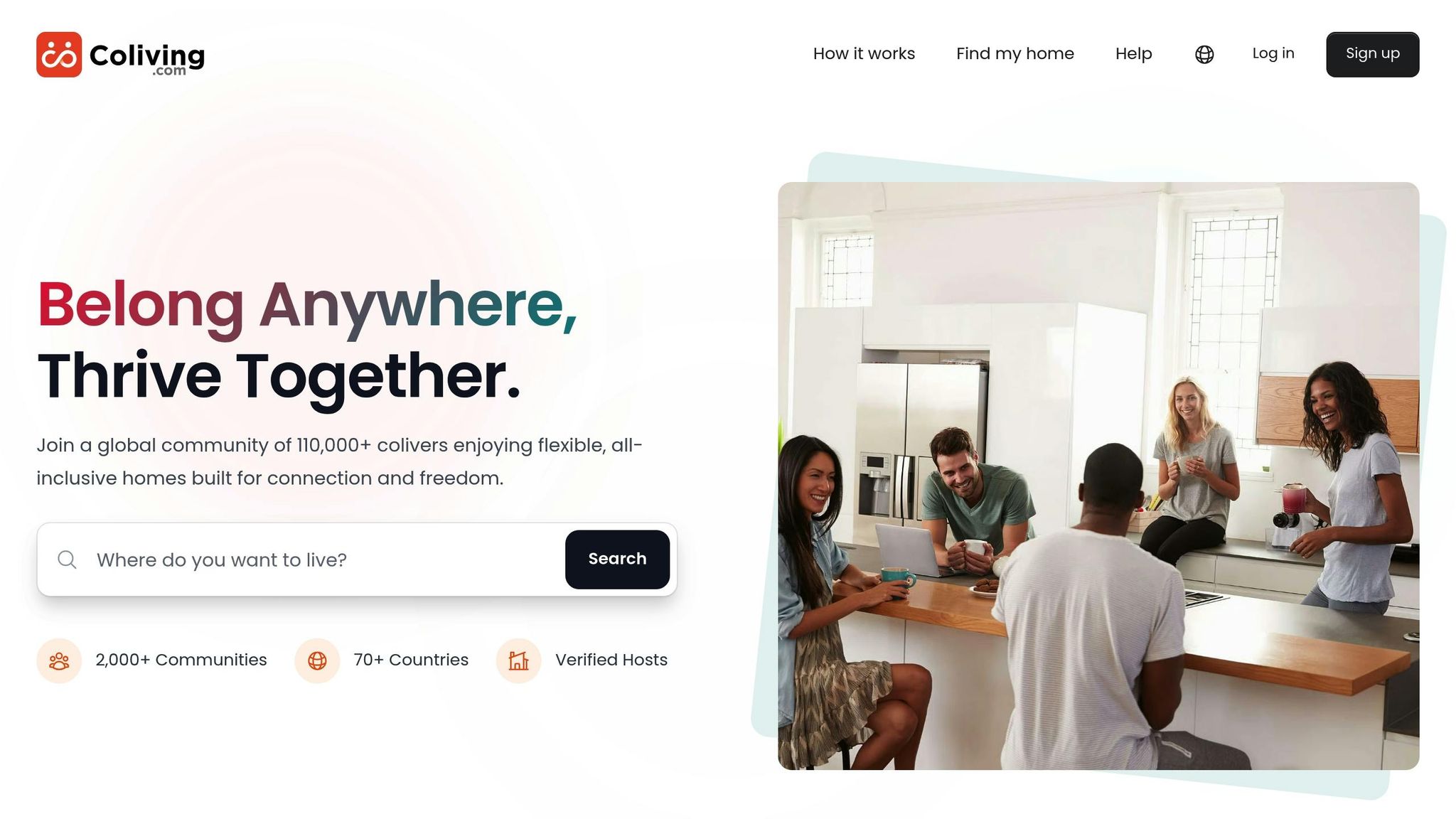
Coliving.com takes the hassle out of finding shared living spaces by connecting renters to modern housing solutions that address challenges like high urban costs and social isolation. As cities grow and housing needs shift, platforms like this have become essential. Coliving.com stands out as the largest coliving marketplace, offering 38,000 rooms across 380 cities in over 70 countries. Whether you're looking for affordability, community, or convenience, this platform helps you find a space that suits your lifestyle and budget.
Easy Online Search and Booking
Coliving.com simplifies the entire process of finding and securing a coliving space. You can search, compare, and book your spot - all online. Listings feature transparent pricing, so you know exactly what to expect before making a commitment. This fully online process is especially handy if you're moving from another city or even another country.
Flexible payment options make the move-in process less stressful. Instead of dealing with the typical upfront costs like first and last month's rent plus a security deposit, the platform offers payment plans that fit your financial needs. This clarity ensures there are no unexpected costs, making planning your move easier.
A Global Reach: 380 Cities in 70+ Countries
Whether you're considering San Francisco, Berlin, or Bangkok, Coliving.com’s extensive network has you covered. With 1,900 coliving spaces managed by 750 hosts worldwide, the platform gives you access to far more options than just the major metropolitan hubs. It’s a resource for everyone - from local renters seeking affordable urban housing to international movers starting fresh in a new country.
The variety of spaces caters to diverse needs. For instance, remote workers can find accommodations with reliable Wi-Fi and workspaces, while young professionals might prefer locations near business districts. Starting prices are as low as $100 per month, making coliving an option for a range of budgets and lifestyles.
Customer Protections: Money-Back Guarantees and Simple Cancellations
Moving into a new home can feel risky, but Coliving.com offers protections to minimize those worries. Their money-back guarantee ensures you’re covered if a property doesn’t match its listing - like missing amenities or inaccurate descriptions. If you report an issue on move-in day with photo evidence, you can either get a full refund or have the platform arrange alternate accommodations that meet your expectations.
"Our Money-back Guarantee ensures you are protected against significant discrepancies between the property you book and what is advertised." – Coliving.com
Cancellation policies are also straightforward. Hosts choose from five standardized options - Flexible, Moderate, Standard, Firm, or Strict - and the policy is clearly displayed before booking. You can cancel directly through your account dashboard without the hassle of phone calls or paperwork. With a 4.0/5 rating on Trustpilot from 200 reviews, users highlight the platform’s responsive support and clear listings, which make the moving process smoother. These features reflect how technology and transparency are reshaping urban housing solutions.
What's Next for Coliving and Urban Housing
Coliving is adapting to urban housing shortages and shifting work-life dynamics. Developers, policymakers, and residents are reimagining how urban spaces can serve multiple purposes without breaking the bank. Larger projects, creative reuse of vacant buildings, and growing interest from younger renters are reshaping the urban housing landscape. These changes are driving new approaches to how buildings are used, how spaces are transformed, and who these spaces serve.
Bigger Buildings and Mixed Housing Models
Coliving has grown from small-scale setups to massive high-rise conversions that house hundreds of people. These larger developments are becoming more flexible, with entire floors dedicated to different uses, such as student housing, staff accommodations, or supportive housing. By combining multiple purposes under one roof, these mixed-use buildings can cater to diverse groups while sharing communal amenities like gyms, coworking spaces, and kitchens. This shift toward institutional leasing shows how coliving is expanding beyond individual renters to address broader housing challenges, offering practical solutions to affordability and efficient use of urban space.
Converting Empty Buildings into Coliving Spaces
With office vacancy rates hovering around 20% - leaving over a billion square feet unused - developers are turning outdated office buildings into coliving communities. These conversions are 25% to 35% cheaper than constructing new apartments, thanks to existing infrastructure like centralized plumbing and mechanical systems. For example, in January 2026, Post Brothers began transforming two vacant office buildings near Dupont Circle in Washington, D.C., into more than 500 apartments, with 60 units earmarked for affordable housing (Source: NPR, 2026). Similarly, a zoning update in Phoenix in June 2025 allowed the conversion of a 38-story high-rise into 600 micro-apartments after the city lifted downtown density restrictions (Source: Pew Charitable Trusts, 2025). These projects show how coliving can address office vacancies and urban housing shortages at the same time.
"Ironically, low-cost housing, rather than high-end conversions, may be the most financially feasible option for the nation's underused office space." - Alex Horowitz, Project Director, Housing Policy, The Pew Charitable Trusts
Growing Interest from Gen Z and Digital Nomads
Coliving is especially appealing to younger renters and remote workers because it offers affordability, built-in social opportunities, and flexible lease terms. In 2023, US-based Common merged with Europe's Habyt Group, creating a global entity managing 3,789 units across the US, Europe, and Asia (Source: Metropolis Magazine, 2023). For many Gen Z renters, burdened by student loans and high property prices, coliving provides a way to live in expensive cities without sacrificing quality of life. The emphasis on community and cost-sharing aligns perfectly with their priorities. Digital nomads, on the other hand, are drawn to the short-term, fully furnished options that make moving between cities hassle-free. As remote work remains a prominent feature of modern life, both Gen Z and digital nomads will continue to influence the design and marketing of urban housing solutions.
Summary: How Coliving Changes Urban Housing
Coliving tackles urban housing challenges - skyrocketing costs, cramped spaces, and social isolation - by bundling essentials like rent, utilities, Wi-Fi, furniture, and cleaning into a single monthly payment. This streamlined setup eliminates the headaches of managing utilities or furnishing a place, making it easier to live in expensive cities. Plus, the affordability opens the door for greater community engagement.
But coliving isn't just about saving money - it’s about building ready-made communities. Shared spaces like kitchens and lounges, along with organized events, help combat the isolation often felt in big cities. Flexible lease options, ranging from 3 to 12 months, attract urban professionals, remote workers, and Gen Z renters. With Millennials and Gen Z making up 68% of coliving residents, these spaces are clearly designed around their preferences.
By making the most of available space - housing up to three times more people per floor - coliving also supports sustainability and breathes new life into urban areas. Developers are transforming empty office buildings and creating mixed-use projects, addressing both housing shortages and unused commercial properties.
Platforms like Coliving.com make finding these spaces simple, offering access to over 38,000 rooms in 380 cities across 70+ countries. With features like money-back guarantees and easy cancellations, coliving provides a flexible, cost-effective, and community-driven way to live in cities. Whether you're a young professional, a remote worker, or just looking for connection in a new place, coliving redefines urban living.
FAQs
How much privacy do you get in coliving?
Coliving spaces usually offer private bedrooms or studios, giving residents a decent amount of privacy. Many of these setups include features like secure entry systems and designated quiet areas, with some even offering en-suite bathrooms for added convenience. That said, privacy levels can vary depending on the specific arrangement. Shared spaces, such as kitchens or lounges, might require open communication and clear boundaries with housemates. Thoughtfully designed coliving environments often balance personal space and community interaction through smart layouts and secure access options.
What’s usually not included in the monthly fee?
Monthly fees for coliving spaces typically cover rent, but utilities, cleaning services, and personal expenses are often not included unless explicitly mentioned. Depending on the arrangement, these additional costs might either be bundled into the rent or charged separately.
Who is coliving best for?
Coliving works well for people who prioritize community, cost savings, and adaptable living in city environments. It's a favorite among young professionals, digital nomads, students, and remote workers seeking budget-friendly housing in urban areas. These residents often enjoy the chance to build social connections and share experiences, along with the ease of flexible, short-term living setups that match their active and changing lifestyles. It's an excellent option for those who thrive in lively, connected spaces.

