
Coliving has shifted from being a niche housing option to a mainstream solution for urban living challenges. With rising rents, stagnant wages, and the rise of remote work, more people - especially Millennials and Gen Z - are turning to coliving for affordability, flexibility, and community.
Key points:
- Market Growth: Valued at $12.2 billion in 2023, the global coliving market is projected to hit $18.5 billion by 2028, with a 13.3% annual growth rate.
- Affordability: Coliving saves residents an average of $680/month compared to traditional housing by bundling rent, utilities, Wi-Fi, and cleaning into one payment.
- Remote Work: 58% of Americans work remotely, increasing demand for coliving spaces with coliving and coworking amenities. Properties with such features report 18% higher occupancy rates.
- Demographics: Millennials and Gen Z make up 68% of coliving residents, drawn by lower costs and built-in communities.
Examples like The Collective in London (92% occupancy in 2023) and Common’s 5,000+ units in the U.S. (87% occupancy in 2024) demonstrate coliving's growing appeal. Challenges include zoning laws, financing hurdles, and scaling responsibly, but the model addresses housing shortages, reduces costs, and fosters connections.
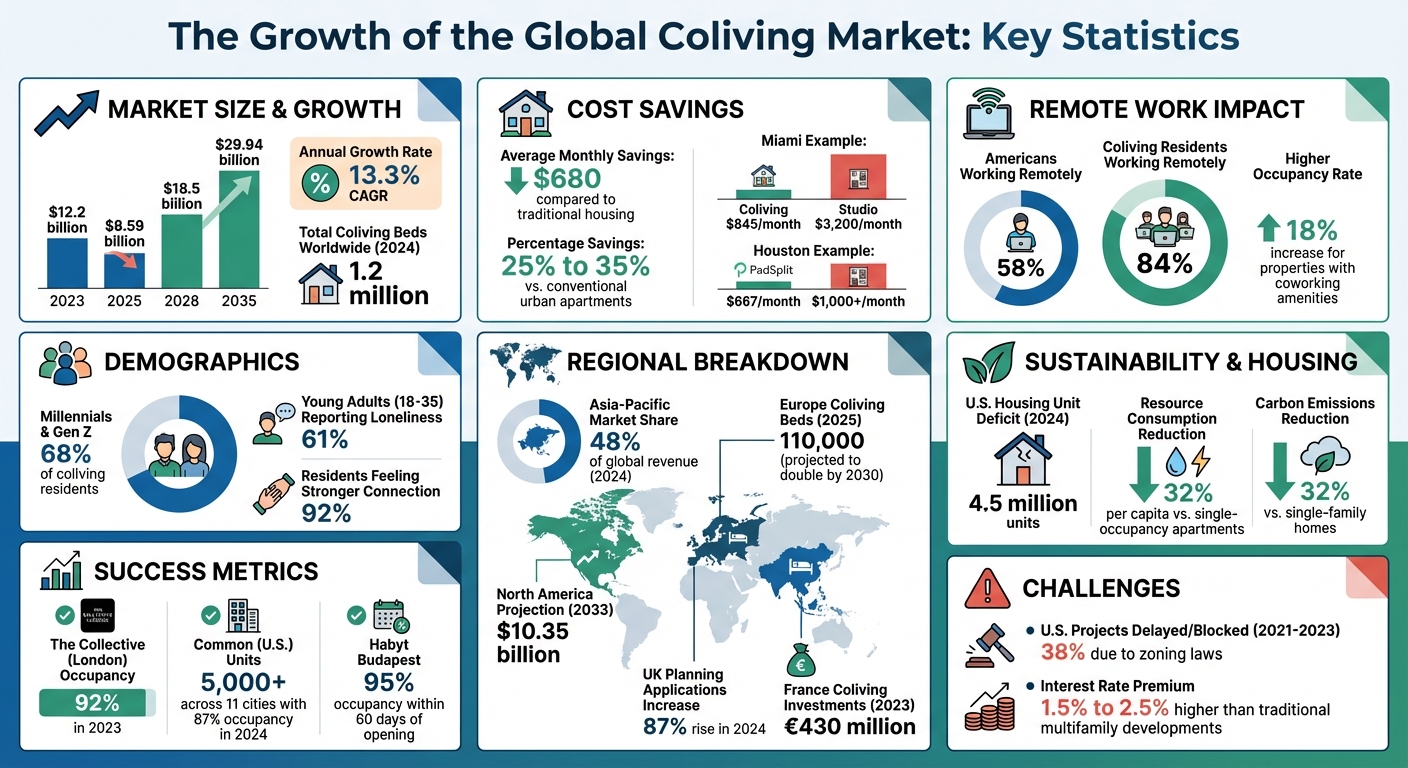
Global Coliving Market Growth Statistics 2023-2035
What's Driving the Growth of the Coliving Market
Rising Urban Costs and Housing Affordability
With housing costs skyrocketing in many cities, coliving has emerged as a practical solution for those feeling the squeeze. Rising rents paired with stagnant wages have made traditional housing unattainable for many young professionals, pushing them toward shared living arrangements.
Coliving offers a straightforward solution by bundling rent, utilities, high-speed Wi‑Fi, cleaning services, and furniture into one monthly payment. For example, in Miami, private coliving rooms start at $845 per month, while studio apartments average $3,200. Similarly, in Houston, PadSplit offers units at $667, far below the $1,000 or more typically required for a studio. On average, coliving residents across the U.S. save about $680 per month compared to traditional housing options.
Beyond cost savings, coliving eliminates many of the upfront expenses that come with moving, like security deposits, broker fees, and furniture purchases. Flexible month-to-month leases also allow residents to avoid steep penalties for breaking long-term contracts - an appealing option in today’s unpredictable job market. These affordability benefits align with broader shifts in how people live and work, particularly as work culture evolves.
Remote Work and Digital Nomads
The rise of remote work has transformed what people look for in a home, driving demand for spaces that are both flexible and functional. With 58% of Americans now working remotely at least one day a week, coliving properties that include coworking amenities see 18% higher occupancy rates than those without. In fact, 84% of coliving residents work remotely at least part-time.
Take Tripalink's Post Chicago development, which opened in August 2023. Featuring 107 coliving units starting at $1,375, the property is designed with remote workers in mind. It offers coworking spaces, high-speed internet, and flexible leases, along with AI-powered tools to simplify the housing search for tech-savvy professionals. Meanwhile, global hubs like Bali, Lisbon, and Barcelona have embraced "Nomad Coliving", catering to professionals who want to maintain their careers while living in vibrant, community-driven environments.
Who's Choosing Coliving
Millennials and Gen Z make up the majority of coliving residents - 68%, to be precise. They’re drawn by the affordability, convenience, and sense of community that these spaces provide. Loneliness is another factor, with 61% of young adults aged 18–35 reporting serious feelings of isolation. Coliving addresses this issue by fostering community-focused living. According to a 2023 survey by Ollie, 92% of residents reported feeling a stronger sense of connection after moving into a coliving space.
Operators like Common have taken this concept further with programs like "Flexible Living." Managing over 5,000 units across 11 U.S. cities, Common allows residents to transfer between properties with just 30 days' notice, offering unmatched mobility for professionals. Habyt’s Budapest property also highlights the appeal of coliving, reaching 95% occupancy within just 60 days of opening in 2023, thanks to its focus on the city’s growing tech and student populations. The market is even branching into specialized communities, catering to groups like tech workers, artists, and wellness enthusiasts, ensuring shared interests and compatibility among residents.
Market Trends and Regional Growth
Coliving is no longer a niche concept; it’s becoming a significant player in the global real estate market. The industry is forecast to expand from $8.59 billion in 2025 to $29.94 billion by 2035, growing at a 13.3% CAGR. By 2024, there were already 1.2 million coliving beds worldwide, signaling its transition into the mainstream. Regional factors like urbanization and increased institutional investment are key drivers shaping this growth.
Asia-Pacific Leads the Market
Asia-Pacific holds the lion’s share of the global coliving market, contributing 48% of revenue in 2024. Cities such as Tokyo, Shanghai, and Bengaluru, with their dense populations and rapid urbanization, create ideal conditions for shared living spaces. Millennials and Gen Z workers, armed with higher disposable incomes, are at the forefront of this trend.
For example, in March 2024, Zolo Stays launched "Zolo Diya", a women-only coliving facility in Mathikere, Bengaluru. Catering to students and professionals, the property achieved 50% occupancy even before its official launch, highlighting the strong demand for specialized coliving solutions in India's tech-centric cities. Amenities like 24/7 security and high-speed Wi-Fi make such spaces appealing.
North America's Growing Adoption
Although Asia-Pacific leads in revenue, North America is carving out its own space in the coliving market. By 2033, the region is expected to hit $10.35 billion, driven by the ongoing housing affordability crisis in cities like New York, Los Angeles, and San Francisco. Flexible lease terms and coworking-friendly amenities make coliving an attractive option, despite occasional zoning hurdles.
Growth in Europe and Other Markets
Europe’s coliving market is steadily maturing, with over 110,000 beds in 2025, a number projected to double by 2030. The UK, in particular, saw an 87% rise in coliving planning applications in 2024 compared to the previous year, underscoring developer confidence. Institutional investors are fueling this growth across the continent.
In 2024, Node partnered with Bain Capital to develop flexible living spaces in Madrid and Barcelona, selling three properties within just five months of their debut. In London, HUB and Bridges Fund Management introduced "Yardhouse" in Wood Lane, a 209-bed project featuring 60 affordable homes for single women, backed by City Developments Limited. France also saw a surge in activity, with coliving investments surpassing €430 million in 2023. Urban Campus launched "Colombes-Stade", a development with 116 units priced about 10% below market rates, offering unfurnished apartments to keep housing accessible in competitive areas.
Examples of Successful Coliving Spaces
Around the world, coliving spaces are thriving, offering unique solutions for various lifestyles, from bustling city centers to serene remote work havens. These examples highlight how coliving has evolved to meet the needs of young professionals, remote workers, and students, blending affordability, community, and convenience.
Urban Coliving Spaces for Young Professionals
For young professionals, coliving in major cities offers a mix of affordability and connection. Take Manhattan's Central Harlem, for instance. This space boasts a 5.0/5 rating from 101 reviews, celebrated for its vibrant international community. Residents, with an average age of 27 years, enjoy a balanced 50/50 male-to-female ratio and represent over 65 nationalities. English serves as the common language, fostering a truly global living experience.
In Brooklyn, the St. Marks Ave Brownstone in Crown Heights offers a more luxurious take. This 8,600 square foot renovated home features 24 bedrooms, a cinema room, an on-site gym, and a rooftop terrace with stunning views of the Manhattan skyline. With a 5.0/5 rating from 109 reviews, residents stay an average of 8 months, drawn by its location near Prospect Park and regular community events. Private rooms range from $1,560 to $2,200 per month, and the price includes utilities, high-speed Wi-Fi, and weekly cleaning.
Coliving Options for Remote Workers
Remote workers often seek spaces that combine work-friendly amenities with a sense of community. The Vallvidrera Oasis in Barcelona sets a high standard, having won the Coliving Awards 2023. Designed for "conscious entrepreneurs" and investors, this 1,000 square meter (about 10,764 square feet) property includes 10 suite studios, a social club with a bar, and coworking areas equipped with call booths. Prices range from $6,268 per month for king studios with terraces to $2,006 per month for shared six-bed rooms.
"For digital nomads, the most meaningful value lies not in simple sightseeing, but in experiences that go beyond tourism - what we call 'Sight-Connecting,' the opportunity to genuinely connect with local communities." - Ryo Osera, CEO, Yugyo Inc.
If Barcelona feels pricey, Spain offers more budget-friendly options. In Malaga, a coliving community near the Andalucía Technology Park offers private rooms starting at $807 per month. Meanwhile, Valencia’s digital nomad hub provides private rooms with terraces and ergonomic workstations, starting at $927 per month.
Affordable Student Housing
Coliving also provides a practical solution for students, with all-inclusive pricing and easy setups. In Brooklyn’s Bed-Stuy neighborhood, shared rooms start at $959 per month, while private rooms are available from $1,396 per month - a bargain compared to typical New York City rents. The space, rated 4.9/5 from 42 reviews, includes furnished rooms, common groceries, and essential bathroom supplies.
Across the Atlantic in Paris, students can find a coliving retreat built with sustainable wood structures. This space has earned a 5.0/5 rating from 85 reviews, with private rooms starting at $1,010 per month. Utilities, cleaning, and community events are all included, making it an attractive option for international students navigating the complexities of living abroad.
The Future of Coliving: Challenges and Opportunities
Technology and Digital Booking
Coliving operators are leaning heavily on technology to streamline processes and improve efficiency. Through API-first tech stacks, they’ve integrated booking systems, smart locks, and maintenance tools into cohesive platforms. Modern Property Management Systems now automate tasks like cleaning based on real-time checkouts, cutting down on manual work. Platforms such as Coliving.com have taken this a step further, offering users the ability to explore 1,900 coliving spaces across 70+ countries, compare options, and secure a room entirely online - all in under 10 minutes.
A prime example of this efficiency is Habyt, a global operator that achieved 95% occupancy within just 60 days of launching a new property in Budapest in 2023. Serving over 14,000 residents across 11 countries, Habyt relies exclusively on digital booking to maintain its pace of growth. Digital tools like these have allowed coliving operators to scale quickly while keeping occupancy rates high and service consistent. However, as technology drives expansion, operators face the challenge of maintaining quality while growing at a rapid pace.
Challenges as the Market Grows
While technology has made operations smoother, the rapid growth of the coliving sector presents new hurdles. With the market expected to grow from $12.2 billion in 2023 to $18.5 billion by 2028, operators are under pressure to scale responsibly. Institutional investors, including pension funds and banks, are entering the space, demanding higher levels of transparency. They expect standardized reporting, real-time data access, and digital audit trails - capabilities that many smaller or early-stage operators are still working to develop.
Zoning laws have also created obstacles. Between 2021 and 2023, 38% of proposed coliving projects in major U.S. cities were delayed or blocked due to outdated regulations from the 1970s that restrict the number of unrelated adults living together. On top of this, financing remains a challenge. Coliving projects often face interest rates 1.5% to 2.5% higher than traditional multifamily developments because lenders perceive them as more complex to operate. Past industry missteps, such as overcrowding and subpar maintenance during aggressive expansion phases, have further fueled this caution. As a result, operators are shifting focus from rapid growth to profitability, upgrading from basic spreadsheets to integrated systems capable of managing thousands of beds without compromising service quality.
Global Accessibility and Housing Solutions
Coliving has emerged as a practical answer to housing shortages across the globe. In the U.S. alone, there’s a deficit of 4.5 million housing units as of 2024, and traditional studio apartments are increasingly unaffordable for young professionals. Coliving offers a solution by bundling rent, utilities, Wi-Fi, and cleaning into a single monthly payment - typically saving residents 25% to 35% compared to renting a conventional urban apartment. Many urban housing experts now see coliving as a necessary evolution in markets where traditional housing options are no longer viable for younger demographics.
One innovative approach gaining traction is adaptive reuse - the transformation of underutilized office buildings and hotels into coliving spaces. This strategy not only addresses urban housing shortages but also reduces commercial vacancy rates. Additionally, shared living arrangements cut per-capita resource consumption by an average of 32% compared to single-occupancy apartments, making coliving an appealing option for both environmentally conscious residents and investors.
With digital platforms now connecting users to coliving spaces in 380 cities worldwide, this isn’t just a passing trend. The combination of affordability, sustainability, and technological integration is positioning coliving as a long-term solution to global housing challenges.
Closing Thoughts
Coliving has grown into a $12.2 billion industry, transforming from basic apartment conversions into professionally managed spaces with high-end amenities. By 2035, it's projected that coliving could cater to 5% to 10% of urban renters, signaling its shift into the mainstream.
This trend aligns with the broader embrace of the sharing economy. Much like how Uber and Netflix have become part of daily life, coliving addresses a pressing need: affordable housing in cities where traditional studios are often out of reach. Beyond cost, it tackles urban isolation and even reduces carbon emissions by 32% compared to single-family homes.
The appeal of coliving lies in its adaptability. Whether you're a remote worker craving connection, a student seeking budget-friendly options, or a young professional navigating pricey urban living, coliving delivers a practical solution. Platforms like Coliving.com make the process seamless, offering access to 1,900 spaces across 70+ countries. With fully online bookings, you can secure a space in under 10 minutes, with utilities, Wi-Fi, and cleaning services included in a single monthly payment starting at $100.
As urban costs rise and remote work becomes the norm, coliving is reshaping how people think about housing. It's not about replacing traditional options - it’s about creating a new way to live that reflects modern priorities. Coliving is carving out its place as a fresh approach to urban living.
FAQs
What should I look for in a good coliving space?
A great coliving space strikes the right balance between private bedrooms and shared areas such as kitchens, living rooms, and workspaces. This setup promotes a sense of community while ensuring personal space is respected. Pay attention to shared amenities that encourage connection, clear guidelines to keep things running smoothly, and modern features like smart locks or energy-saving systems. The ideal space should match your lifestyle, offering a blend of community support and the privacy you need to feel at home.
How do coliving leases and move-in costs usually work?
Coliving leases are usually quite flexible, often operating on a month-to-month basis, which makes them easier to manage compared to traditional long-term rentals. The move-in costs are typically bundled into a single payment that covers rent, utilities, and amenities. This setup streamlines the process and minimizes upfront expenses. In most cases, you'll also need to pay a refundable security deposit, which is often equivalent to one month's rent or less. This arrangement offers clarity and convenience, particularly in cities where housing costs can be steep.
Are there rules for privacy, guests, and shared spaces?
Coliving spaces usually come with a set of rules designed to maintain privacy and harmony among residents. These rules often cover things like guest policies, quiet hours, and cleanliness in shared areas. The focus is on creating an environment where everyone feels respected and comfortable. While specific guidelines can differ from one coliving space to another, the overall aim is to strike a balance between personal freedom and fostering a considerate, cooperative community.

