

Tokyo is often seen as an expensive city, but in 2026, it ranks 95th globally for cost of living - cheaper than cities like New York or London. However, living here comes with unique challenges, especially for expats and young professionals. Upfront rental costs, rising food prices, and mandatory expenses like health insurance can catch newcomers off guard. Here's what you need to know:
- Housing: Expect to spend $965–$1,935 per month, with hefty move-in fees (3–6 months’ rent upfront). Outer wards like Adachi are cheaper, while central areas like Minato cost significantly more.
- Food: Monthly grocery bills for families rose to $580–$613 in 2025. Shopping after 7 PM for discounts or using bulk stores like Gyomu Super can save money.
- Utilities: Monthly costs for electricity, gas, and water range from $49–$103 for one person.
- Transportation: Train fares cost $0.90–$3.22 per trip, while commuter passes range from $52–$97 monthly. Employers often reimburse commuting expenses.
- Mandatory Costs: Health insurance and pension contributions add $206–$322 monthly.
Key Tip: Coliving spaces offer affordable, all-inclusive housing starting at $193/month, helping expats avoid steep upfront rental fees. With smart budgeting, a single person can live comfortably in Tokyo for $1,419–$1,806 per month.
Main Living Expenses in Tokyo
Housing Costs and Rental Options
Housing in Tokyo can take up a big chunk of your budget. If you're looking at a studio apartment (1R or 1K), expect to pay ¥65,000–¥90,000 ($418–$580) in more affordable outer wards like Adachi. In central areas such as Minato or Shibuya, similar spaces range from ¥110,000–¥180,000 ($708–$1,160). For families, larger apartments (3LDK) cost around ¥170,000–¥250,000 ($1,095–$1,610) in the outer wards but jump to ¥250,000–¥450,000 ($1,610–$2,900) in prime central wards.
When moving in, brace yourself for hefty upfront costs. Between deposits (shikikin), key money (reikin), agency fees, guarantor fees, and fire insurance, you'll often need 3 to 6 months' rent upfront. For a ¥100,000 apartment, this could total ¥300,000–¥600,000 ($1,935–$3,870). Many landlords also require a guarantor, and foreigners often use guarantor agencies, which charge ¥10,000–¥30,000 upfront and may also charge annual renewal fees.
Coliving spaces offer a more budget-friendly alternative. Monthly rents for coliving rooms range from ¥30,000–¥50,000 ($193–$322), with utilities included and minimal upfront costs. Plus, you don't need a guarantor. Platforms like Coliving.com make it easy for expats to find flexible, all-inclusive housing options, helping you avoid the financial strain of traditional rentals.
Once you've settled into your new place, budget for utilities and transportation.
Utilities and Monthly Bills
Utilities can add up quickly in Tokyo. Electricity for one person typically costs ¥4,000–¥8,000 ($26–$52) per month, but it can rise by ¥2,000–¥4,000 in extreme-weather months when heating or air conditioning is used heavily. Gas bills average ¥2,000–¥4,000 ($13–$26), while water and sewer charges, billed every two months, come to about ¥1,500–¥2,500 ($10–$16) monthly. For high-speed fiber internet, expect to pay ¥4,000–¥5,500 ($26–$35) per month for speeds up to 1Gbps.
Mobile phone plans vary widely. Major carriers charge ¥7,000–¥9,000 ($45–$58) monthly, but switching to budget providers like Rakuten Mobile, IIJmio, or Mineo can bring that down to ¥2,000–¥3,000 ($13–$19). Choosing a budget plan could save you over $400 annually. To track your utility usage and avoid surprises, apps like MyTEPCO or Tokyo Gas can help.
Transportation and Getting Around
Getting around Tokyo is efficient but comes at a cost. Train fares range from ¥140 to over ¥500 ($0.90–$3.22) per trip, while a monthly commuter pass for a typical 30-minute ride costs ¥8,000–¥15,000 ($52–$97). Many employers reimburse commuting costs, which could save you up to $1,160 annually - check your employment contract to confirm this benefit.
For convenience, grab an IC card like Suica or PASMO. These cards require a ¥500 refundable deposit and make travel seamless. If you're planning a day of heavy travel, a 24-hour subway ticket costs ¥800 ($5.15). Taxis are pricier, starting at ¥500 ($3.22), and if you miss the last train around midnight, you might have to wait until service resumes at 5:00 AM, or pay a steep taxi fare.
Budget Planning by Lifestyle
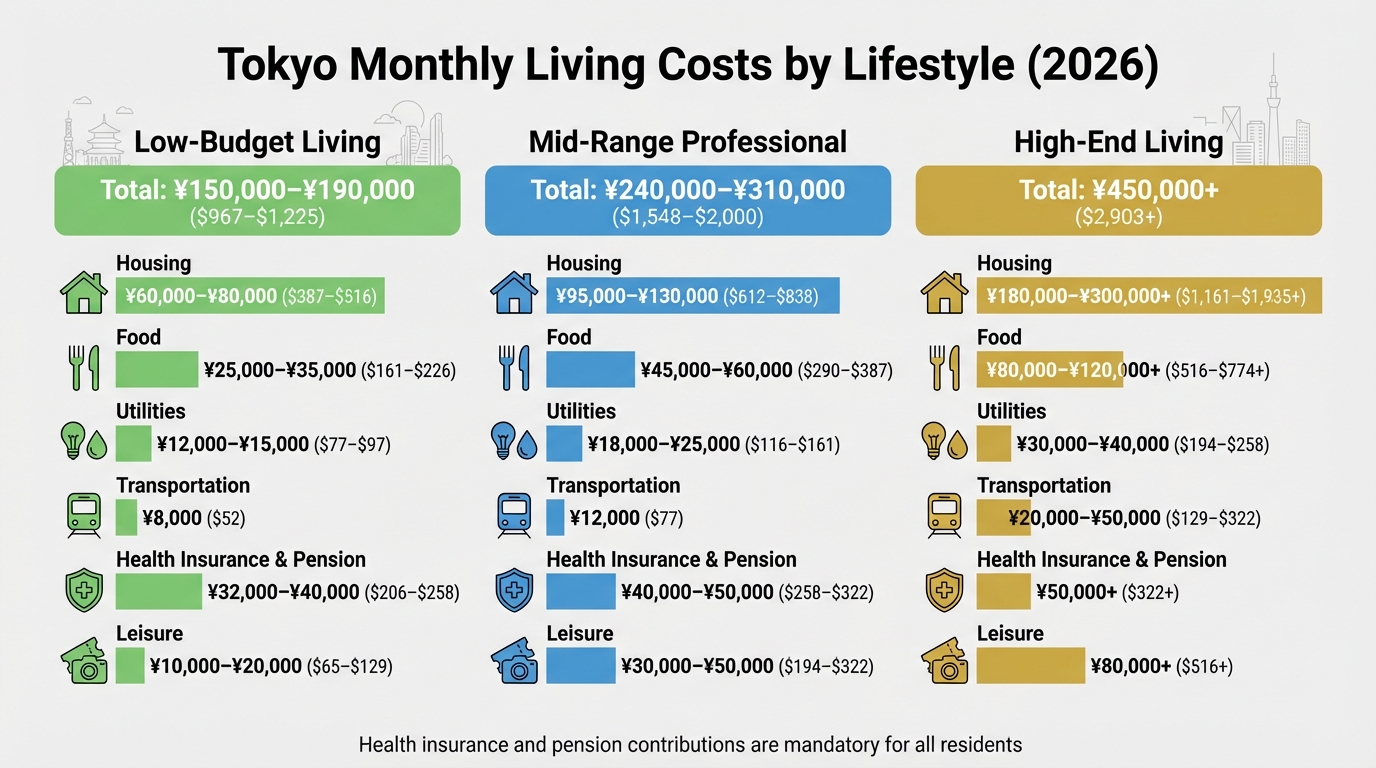
Tokyo Monthly Living Costs by Lifestyle: Budget Breakdown 2026
Living in Tokyo comes with a wide range of monthly expenses, heavily influenced by your lifestyle and location. For a frugal single lifestyle, expect to spend ¥150,000–¥190,000 ($967–$1,225) per month. A mid-range lifestyle costs around ¥240,000–¥310,000 ($1,548–$2,000), while premium living starts at ¥450,000+ ($2,903+). Here’s a closer look at budget estimates for frugal, mid-range, and premium lifestyles.
Low-Budget Living
Living on a tight budget in Tokyo requires careful planning, especially for housing and food. Rent for a shared house or a compact studio in an outer ward typically costs ¥60,000–¥80,000 ($387–$516). Cooking at home keeps food costs low, at ¥25,000–¥35,000 ($161–$226). Utilities add another ¥12,000–¥15,000 ($77–$97), while a commuter pass costs about ¥8,000 ($52). Health insurance and pension contributions are mandatory, costing ¥32,000–¥40,000 ($206–$258). For leisure, keeping spending between ¥10,000–¥20,000 ($65–$129) is manageable.
Shopping at discount supermarkets and buying during markdowns can help stretch your yen further. For affordable housing, platforms like Coliving.com offer rooms for ¥30,000–¥50,000 ($193–$322) with utilities included, eliminating upfront costs and the need for a guarantor.
Mid-Range Professional Budget
For those seeking a more comfortable lifestyle, the key is blending affordability with convenience. Renting a 1K or 1LDK apartment in neighborhoods like Setagaya or Toshima costs ¥95,000–¥130,000 ($612–$838). Food expenses increase to ¥45,000–¥60,000 ($290–$387) when you combine home cooking with occasional dining out. Utilities average ¥18,000–¥25,000 ($116–$161), and transportation costs, including a commuter pass and occasional taxi rides, are about ¥12,000 ($77). Health insurance and pension contributions rise to ¥40,000–¥50,000 ($258–$322), while leisure and miscellaneous spending fall between ¥30,000–¥50,000 ($194–$322).
High-End Living
For those opting for a premium lifestyle, Tokyo offers luxurious options in central neighborhoods like Minato or Shibuya. Renting a 2LDK or larger apartment here starts at ¥180,000–¥300,000+ ($1,161–$1,935+). Dining out frequently at high-end restaurants pushes food costs to ¥80,000–¥120,000+ ($516–$774+). Utilities for a larger space range from ¥30,000–¥40,000 ($194–$258). Transportation costs, including taxis or car ownership, add another ¥20,000–¥50,000 ($129–$322). Health and pension contributions exceed ¥50,000 ($322), and leisure activities can easily cost ¥80,000+ ($516+).
This lifestyle emphasizes convenience and luxury but requires a high income to maintain. Your neighborhood and lifestyle directly affect your overall expenses, which we'll explore further in the next section.
Tokyo Neighborhoods by Cost
Where you live in Tokyo can significantly impact your monthly rent, with differences ranging from ¥50,000 to ¥100,000. Beyond rent, your ward choice affects commute times, access to amenities like international schools and foreign-friendly supermarkets, and your overall lifestyle.
Central Tokyo: High Costs, Unmatched Convenience
Neighborhoods like Minato, Shibuya, and Shinjuku are the priciest but offer unparalleled convenience. For example, a 1K apartment (around 25 m² or 270 sq ft) in Minato costs between ¥130,000 and ¥180,000, while Shibuya offers similar units for ¥120,000 to ¥160,000. These areas often allow commutes under 10 minutes, with many homes located within a short walk of major business districts. If you're within a 5-minute walk of a major train station, expect to pay an additional ¥10,000 to ¥25,000 per month. Overall, rents in these central wards can be 30% to 50% higher than the Tokyo 23-ward average.
Outer Wards: Affordable Living with Longer Commutes
For budget-conscious renters, outer wards like Adachi, Katsushika, and Nerima offer more affordable options. Here, 1K apartments range from ¥62,000 to ¥95,000 - nearly half the cost of similar units in central Tokyo. However, the trade-off is longer commutes, typically 35 to 45 minutes to central business areas. Moving about 30 minutes away from a hub like Shinjuku could save you ¥20,000 to ¥30,000 in rent. Additionally, many employers in Japan cover commuter pass costs, which can help offset the expense of traveling farther.
Mid-Range Neighborhoods: A Balance of Cost and Convenience
Setagaya, Toshima (home to popular Ikebukuro), Nakano, and Koenji offer a middle ground. Rents for 1K apartments in these neighborhoods range from ¥85,000 to ¥120,000, and commutes to major hubs are typically 10 to 20 minutes. Ikebukuro is a favorite for new arrivals due to its excellent transport links and multilingual services. Meanwhile, Nakano and Koenji provide quick access to Shinjuku and boast vibrant local scenes. These areas often feature newer buildings with better soundproofing, which appeals to professionals.
| Neighborhood | Category | 1K Rent Range | Commute to Hub |
|---|---|---|---|
| Minato | Central / Premium | ¥130,000–¥180,000 ($838–$1,161) | Under 10 min |
| Shibuya | Central / Trendy | ¥120,000–¥160,000 ($774–$1,032) | Under 10 min |
| Setagaya | Mid-Range / Family | ¥90,000–¥120,000 ($580–$774) | 20+ min |
| Toshima | Mid-Range / Hub | ¥85,000–¥110,000 ($548–$709) | 10–20 min |
| Nerima | Outer / Residential | ¥75,000–¥95,000 ($484–$613) | 20–30 min |
| Adachi | Outer / Budget | ¥65,000–¥80,000 ($419–$516) | 30–45 min |
Knowing these cost differences can help you make smarter choices about where to live.
How to Reduce Your Monthly Costs
As living expenses in Tokyo keep rising, expats face the challenge of managing their budgets effectively. With consumer prices up 3.7% in 2025 and real wages down 1.3%, making your yen stretch further is more important than ever. Here are some practical solutions to help you save without compromising your lifestyle.
Coliving for Lower Housing Costs
Traditional Japanese rentals can feel overwhelming, with upfront costs often reaching 3–5 months' rent. This could mean thousands of dollars before you even step through the door. Coliving spaces, however, simplify the process by bundling rent, utilities, Wi-Fi, and cleaning services into one monthly payment - starting at around $100. Plus, these spaces are furnished and move-in ready, saving you time and money.
For flexible, all-inclusive options across Tokyo, check out Coliving.com. Whether you're looking for a spot in a bustling central neighborhood or a quieter, budget-friendly area, coliving cuts out unpredictable bills and makes budgeting straightforward. It’s a great way for newcomers to navigate Tokyo’s rental market while keeping costs down.
But housing isn’t the only area where you can save. Let’s talk food and transportation.
Cutting Food and Grocery Expenses
Timing your grocery runs can make a big difference. Shopping after 7:00 PM is smart, as supermarkets like AEON, Maruetsu, and Seiyu often mark down prepared bento boxes and fresh items by 20–50%. A dinner that typically costs ¥800 can drop to just ¥400 with these nightly discounts.
For pantry staples, head to Gyomu Super, where you’ll find bulk deals on rice, pasta, and frozen goods. Prices here are 20–30% lower than at regular supermarkets. For example, a 5kg bag of rice costs around ¥4,800 ($31), and buying in bulk helps stretch your budget even further.
Dining out? Opt for lunch sets (teishoku) at restaurants. These meals, which might cost ¥4,000 at dinner, are typically priced between ¥1,000 and ¥1,800 at lunchtime. To save even more, use QR-pay apps like PayPay or Rakuten Pay to earn cashback on top of these deals.
Reducing Transportation Costs
If you’re employed, check whether your company reimburses commuter passes - it’s a legal requirement for many Japanese businesses and can save you ¥8,000–¥15,000 monthly ($52–$97). For the best value, invest in a 6-month pass, which offers a 20–25% discount compared to daily tickets. For instance, commuting between Kawaguchi and Shimbashi with a 6-month pass saves you about ¥30,140 ($194).
For shorter trips, consider cycling to avoid train or bus fares altogether. And since March 2025, renewing commuter passes has become even easier with the Welcome Suica or Mobile PASMO apps, which now accept international credit cards. Families can also save: children under 6 ride free, while elementary students pay half fare.
These tips can help you manage your expenses more efficiently while keeping things convenient and comfortable.
Final Thoughts
Living in Tokyo can be manageable with the right approach. Rent is often the largest expense and varies widely, from ¥60,000 ($387) in the outer wards to over ¥160,000 ($1,032) in central districts. Choosing the right neighborhood can make a huge difference in your monthly budget. With consumer prices and rents reaching record highs in 2026, it’s smart to build a 10% buffer into your budget to cover any unexpected increases. This tip complements other cost-saving strategies mentioned earlier.
Coliving options, starting at roughly $100 per month (utilities and furnishings included), are a great way to avoid steep move-in fees and simplify the process. If you’re new to Tokyo’s rental market, platforms like Coliving.com offer flexible, all-inclusive housing to make budgeting easier from the start.
Beyond housing, thoughtful planning can stretch your yen further. Shopping after 7:00 PM can cut grocery bills by 20–50%, and switching to budget mobile providers might save you over ¥50,000 ($322) annually. These small adjustments can significantly lower your daily expenses.
Even with these considerations, Tokyo is still 46.2% less expensive than New York (excluding rent). With smart budgeting, a single person can live comfortably on ¥220,000–¥280,000 ($1,419–$1,806) per month.
FAQs
How much cash should I bring for Tokyo move-in costs?
Budget between ¥300,000 and ¥700,000 for move-in costs in Tokyo. This amount usually includes the security deposit, key money, agency fees, and other upfront expenses. The exact total can differ based on the property and rental agreement.
What are the mandatory monthly expenses for expats in Tokyo?
Expats living in Tokyo should budget for several mandatory monthly expenses. These typically include rent, health insurance, pension contributions, utilities, and transportation costs. These expenses are essential for daily life and required to meet local legal requirements.
How can I cut my Tokyo budget fast without moving?
If you're looking to trim your Tokyo budget without the hassle of moving, start by tackling your biggest expenses: housing and daily living costs. Consider shared or co-living spaces. These options often offer affordable, all-inclusive housing that covers utilities and Wi-Fi, making budgeting easier.
For food, stick to local eateries, cook at home, or use meal subscription services to save money. To keep transportation costs under control, invest in a monthly commuter pass. It's a predictable way to manage travel expenses. These adjustments can significantly lower your costs while keeping you in place.