

Balancing travel and routine in coliving life is about creating habits that support both work and exploration. Without structure, constant movement can lead to burnout and reduced productivity. Here’s how you can stay organized while enjoying the flexibility of coliving:
- Stick to Core Habits: Identify 3–5 daily non-negotiables, like morning exercise or focused work hours, to maintain stability regardless of location.
- Use Time-Blocking: Plan your day by assigning specific hours to tasks, leaving room for unplanned adventures.
- Leverage Coliving Amenities: Take advantage of shared kitchens, coworking spaces, and reliable Wi-Fi to simplify daily tasks.
- Embrace Slow Travel: Stay longer in one place to establish routines, reduce stress, and connect with the local community.
- Rely on Digital Tools: Apps like Google Calendar, Notion, and TravelSpend can help manage schedules, tasks, and finances on the go.
- Prioritize Health: Maintain fitness, sleep, and mindfulness practices to stay energized and focused.
Creating Daily Schedules That Work Anywhere
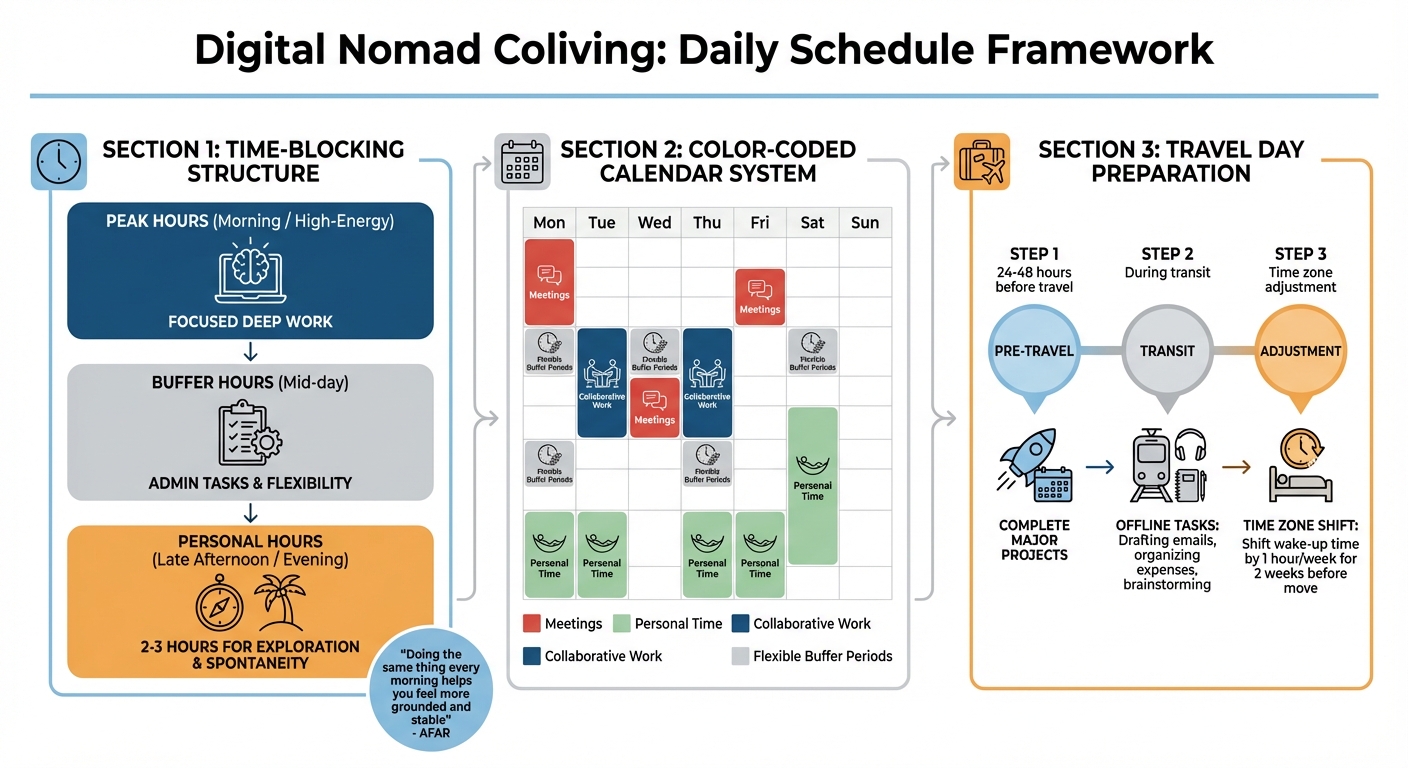
Daily Schedule Framework for Digital Nomads in Coliving Spaces
Thriving in a coliving setup means creating routines that are flexible enough to handle constant changes, not rigid schedules that crumble with every move. Whether you're hopping between cities or countries, your surroundings may shift, but your core habits should remain steady. Here's how to design a daily structure that works no matter where life takes you.
Identify Your Non-Negotiable Daily Habits
Start by figuring out the 3–5 habits you can't go without, no matter where you are. These could be a morning workout, a focused work session, or even taking a proper lunch break. Think of work as a way to enable your travels, not something that gets in the way. This mindset can help you stick to these habits, even when you're tempted to trade them for sightseeing or socializing.
"Doing the same thing every morning helps you feel more grounded and stable, which in turn makes for more sustainable long-term travel." - Annie Daly and Katie Lockhart, AFAR
If possible, try to stay in one location for longer stretches. This makes it easier to build and maintain these habits in a new setting.
Use Time-Blocking to Structure Your Day
Time-blocking turns vague plans into actionable steps. Assign specific hours to your tasks: save your high-energy periods for deep work, schedule meetings during collaboration-friendly times, and leave buffer time for the unexpected. If you’re an early riser, tackle demanding work in the morning; if you’re a night owl, shift those tasks to the evening.
Plan ahead for travel days by finishing major projects 24–48 hours before you hit the road. Use transit time wisely - offline tasks like drafting emails, organizing expenses, or brainstorming ideas are perfect for flights or train rides. When dealing with time zone changes, adjust gradually by shifting your wake-up time by an hour each week for two weeks before your move. This can help you avoid jet lag and stay productive.
For clarity, color-code your calendar: red for meetings, green for personal time, blue for collaborative work, and gray for flexible buffer periods. A quick glance at your schedule will help you protect your priorities while leaving room for spontaneity.
Leave Room for Spontaneous Opportunities
Some of the best moments in coliving happen when you least expect them - a spontaneous beach trip, a cooking session with housemates, or stumbling upon a local festival. Set aside 2–3 hours each day for unplanned adventures. These flex hours work best in the late afternoon or early evening, when work is winding down and social opportunities are heating up.
Organize your day into three categories: peak hours for focused work, buffer hours for admin tasks, and personal hours for exploration. This system allows you to say "yes" to an impromptu hike or dinner without sacrificing your responsibilities. Your morning deep work session remains intact, but less critical tasks, like catching up on emails, can easily be pushed to the next day.
Using Coliving Spaces to Maintain Stability
Establishing routines is easier when your surroundings support them. One of the standout perks of coliving is that everything you need is already in place. Instead of wasting time hunting for dependable facilities, you can dive straight into your work or adventures. Coliving spaces listed on Coliving.com offer the reliable setup that helps you stick to routines, even when you're frequently changing locations. These ready-to-use resources make transitions smoother and less stressful.
Make the Most of Shared Amenities
An on-site kitchen can be a game-changer. It allows you to prepare meals at consistent times, which is great for both your wallet and your well-being. Cooking breakfast becomes a simple, everyday habit, no matter where you are, instead of a task dependent on finding the right café. Plus, shared laundry facilities, coworking spaces, and meeting rooms take the hassle out of managing daily tasks in a new environment.
These amenities work seamlessly because they’re built into your living space. There’s no need to spend time researching gyms, workspaces, or laundromats - everything is ready and waiting for you. This setup helps you keep your routines intact without extra effort.
Participate in Community Activities and Events
Scheduled events can bring structure to your week. Community dinners, skill-sharing workshops, and wellness activities offer regular opportunities to connect and unwind. For example, a weekly group dinner or a Thursday morning yoga session can become reliable anchors in your routine.
Beyond the practical benefits, these activities help combat the isolation that often comes with solo travel or remote work. Being surrounded by people who share similar goals and challenges creates a sense of belonging. This social environment encourages accountability, making it easier to stick to your work schedule while also carving out time for meaningful connections. While community events keep your social life vibrant, well-equipped workspaces ensure you stay professionally productive.
Choose Spaces with Reliable Wi-Fi and Work Areas
A strong internet connection is non-negotiable for remote work. When selecting a coliving space, prioritize locations with dependable Wi-Fi and thoughtfully designed work areas. Poor connectivity can throw off your schedule and disrupt your workflow.
Dedicated workspaces - whether private desks, quiet zones, or collaborative areas - are equally important. They help you maintain clear boundaries between work and relaxation, which is key to staying focused and avoiding burnout. When browsing options on Coliving.com, look for properties that highlight their internet speeds and include photos of their workspaces. These details make all the difference in ensuring you can stay productive, no matter where you are.
Digital Tools and Apps for Staying Organized
Staying organized while on the move is no small feat, but digital tools can make it much easier. Just like structured routines are key in coliving, having the right apps and portable gear ensures you stay productive, even when you're constantly changing locations. Whether you're hopping between coliving spaces or juggling work deadlines, a reliable way to manage tasks, track expenses, and maintain your workflow is a must. The best part? Many of these tools sync seamlessly across devices, so your routines travel with you wherever you go.
Apps for Scheduling and Task Management
When you're working remotely, a good scheduling system is your best friend. Tools like Google Calendar, Notion, or Asana help you plan work blocks, set reminders for deadlines, and coordinate with teammates across time zones. A simple habit, like planning your next day every evening, can save you from the dreaded morning decision fatigue. This way, you'll be ready to dive into your day, whether you're exploring a new city or settling into a familiar coliving space.
If distractions are a challenge, keep your focus sharp by limiting yourself to one browser tab at a time. Extensions like OneTab can help reduce digital clutter and make single-tasking much easier. Once your schedule is locked in, make sure your physical workspace is just as organized and supportive of your productivity.
Portable Equipment for Remote Work
Your remote work gear should strike a balance between portability and performance. A lightweight laptop, noise-canceling headphones, and a portable stand can turn almost any desk into a productive workspace. These essentials are compact enough to carry yet powerful enough to meet your needs.
Looking for a reliable spot to work outside your coliving space? Platforms like Workfrom.co offer crowdsourced recommendations for cafes and coworking spaces with solid Wi-Fi and plenty of power outlets in cities around the world. With your mobile office set up, the next step is keeping your finances in check.
Apps for Tracking Expenses
Managing your money while traveling doesn't have to be a headache. Apps like TravelSpend and Trail Wallet are perfect for solo travelers who want a simple way to log expenses, while Splitwise and Tricount are great for splitting costs on groceries, group meals, or shared rides with your coliving crew. Fun fact: travelers who track their daily budgets tend to spend 23% less than those who don't.
To keep things smooth, set up expense categories in advance and log your costs as they happen. For managing multiple currencies, tools like Wise and Revolut offer low-fee international transfers and real-time exchange rates. And don’t forget to back up your financial records - cloud syncing with Dropbox or Google Drive can save you a lot of trouble if your device gets lost or damaged.
"When your money is managed, your mind is free. You don't have to stress every airport snack or lounge pass." - Candace Ross, Digital Nomad Lifestyle
Slow Travel: Balancing Exploration with Routine
Constantly packing and adjusting to new environments can leave you feeling drained. Slow travel flips the narrative by encouraging longer stays, allowing you to truly immerse yourself in a place rather than rushing through it. Spending weeks or even months in one coliving space gives you the chance to establish routines while exploring at a relaxed pace.
Why Longer Stays Make Sense
Jumping between destinations every few days can feel like a never-ending game of catch-up. You’re always figuring out where to shop, how to connect to Wi-Fi, or which café offers the best workspace. Staying put for an extended period eliminates this cycle of constant adjustment. You’ll have time to set up your "office hours", discover your favorite hangout spots, and build connections with the local community.
The relationships you form with fellow coliving residents during longer stays often lead to unexpected opportunities - whether it’s a new friendship, a creative collaboration, or valuable networking. Quick visits rarely allow for this kind of depth.
"Rather than flitting from destination to destination, consider giving yourself enough time in each location to fully acclimate to not only your workspace but the surrounding community." - GoOverseas
Slow travel also has practical perks. Fewer flights mean a smaller carbon footprint, less jet lag, and reduced transit stress. Plus, with fewer disruptions, you can maintain a consistent work routine, leading to better focus and productivity.
Align Travel Plans with Your Work Schedule
Strategic planning makes all the difference when balancing work and travel. By mapping out your travel dates weeks or months in advance, you can secure better deals on coliving spaces and avoid last-minute chaos. This also allows you to plan heavy workloads around travel days, ensuring major tasks are completed 24–48 hours before you’re on the move.
"Planning your schedule weeks to months in advance will take the surprises out of your day-to-day flow." - GoOverseas
Adjusting to time zone changes can be smoother if you gradually shift your sleep schedule by an hour each week before traveling. Use transit time wisely - draft emails, brainstorm, or prepare invoices offline - so you can dive into exploring once you arrive. Just steer clear of scheduling critical meetings on travel days; delays and unreliable Wi-Fi can easily derail your plans.
Building Routines Through Community
The people you surround yourself with play a big role in shaping your daily habits. Living in a community of remote workers or like-minded individuals naturally encourages shared routines, whether it’s cooking together, coworking, or exploring the neighborhood. These shared activities make it easier to establish a sense of structure, especially when paired with communal spaces designed for these purposes.
Organize Shared Meals or Work Sessions
One way to tap into the power of community is by planning joint work sessions or shared meals. For example, coworking with housemates can boost accountability. When you know someone’s counting on you to show up at 9:00 AM in the common workspace, it’s a lot harder to hit snooze on your alarm. Setting regular start and end times for these sessions can mimic the structure of an office environment.
You might even dedicate specific days to coworking as a group. Use techniques like the Pomodoro Technique with group timers to stay focused - 20-minute bursts of productivity, followed by short breaks, can work wonders. And to make the day more rewarding, plan something fun afterward, like a group dinner or a local outing.
Shared meals, such as a weekly Sunday brunch or rotating potluck dinners, are another great way to build connections. Shopping for groceries together at local markets not only saves money but also creates opportunities for bonding. The secret to making these gatherings successful? Consistency. Find a time that works for most people and make it a regular thing.
Attend Local Events as a Group
Exploring your new neighborhood is easier and more enjoyable with a group. A shared Google Calendar can help track events and prevent scheduling conflicts, especially when everyone has different work hours.
You can take turns organizing these outings, ensuring a mix of activities that cater to everyone’s interests. By including details like group size, time commitment, and activity level in the calendar, you make it easier for everyone to plan their day. Whether it’s a local festival, a museum visit, or a hiking trip, these shared experiences help strengthen community bonds while giving everyone a chance to unwind.
Keeping Up with Health and Wellness
Traveling frequently can take a toll on both your body and mind. Yet maintaining your physical and mental health is key to thriving in a coliving lifestyle over the long haul. The best part? You don’t need a permanent gym membership or a fixed home base to stay on track.
Find Local Fitness Options
Many coliving spaces are equipped with fitness-friendly amenities like on-site gyms, yoga studios, or rooftop areas perfect for quick workouts. When booking through platforms like Coliving.com, look for spaces that highlight these features or are close to parks and outdoor activities. Beyond that, explore local fitness options like hiking groups, paddleboarding, or community sports. And don’t forget to pack lightweight essentials like resistance bands and a reusable water bottle.
If you prefer guided workouts, digital tools like Nike Training Club or Apple Fitness+ can keep you active from the comfort of your private room or shared spaces.
Treat exercise as a must-do, not a maybe. Block off an hour in your calendar and treat it like any other important commitment. Whether it’s morning cardio to shake off jet lag, midday strength training to match your energy levels, or evening stretches to wind down, find a routine that works for you.
Just as critical as exercise is ensuring you get quality sleep to stay energized on the move.
Make Sleep a Priority
Adjusting to new environments can disrupt your sleep, thanks to what’s known as the "First Night Effect", which keeps you more alert than usual. To counter this, bring familiar items like your pillowcase or a favorite scent to create a sense of home wherever you are.
A sleep kit can be a game-changer. Include essentials like an eye mask, earplugs, a travel pillow, melatonin, curtain clips, and light-blocking stickers. These small tools can make all the difference when dealing with unpredictable noise or light in shared accommodations.
If you’re crossing more than three time zones, allow about a day per time zone for your body to adjust. Traveling east? It’s harder for most people because it shortens your natural sleep cycle. Speed up your adjustment with strategic light exposure - seek morning light after traveling east and late-afternoon light after heading west. Set your watch to your destination’s time as soon as you board, skip alcohol and caffeine during flights, and consider taking 1–3mg of melatonin 30–60 minutes before bedtime for the first few days.
"Most people just jump on an airplane and then try to adjust their body clock after they arrive, which is not really a plan. Instead, we can be more proactive in our thinking about sleep when we travel and strategically make adjustments." – Cheri D. Mah, MD, MS, Sleep Physician, Stanford Lifestyle Medicine
If you feel the need to nap upon arrival, keep it short - under 30–40 minutes - and make sure it’s at least eight hours before your planned bedtime to avoid disrupting your sleep schedule.
Once you’ve tackled your physical health, it’s time to focus on keeping your mind clear and stress-free.
Practice Mindfulness and Manage Stress
The constant demands of travel and work can feel overwhelming, no matter how organized you are. Taking time for regular self-check-ins can help you avoid burnout. Dedicate a few minutes each morning to mindfulness practices like meditation, deep breathing, or journaling to process your emotions and thoughts.
Apps like Headspace offer guided meditation sessions that are perfect for travel. To stay focused during work, try the Pomodoro Method - work for 25 minutes, then take a 5-minute break. If noisy environments are a challenge, create a consistent audio backdrop with Spotify playlists featuring LoFi or focus music.
"Slowing down to engage in meditation, journaling, or even just bed rotting with your favorite series will save you from burning out from an otherwise fantastic lifestyle." – Go Overseas
Simple habits can make a big difference. Write down three things you’re grateful for each day, spend time outdoors, or take intentional breaks from screens. Even a 30-minute walk can lift your mood and improve your overall health. Protect your mental space by saying "no" to extra tasks when you’re stretched thin, and set clear "in-office" hours to preserve personal time. If you notice ongoing issues like trouble concentrating or sleeping for more than two weeks, consider reaching out to a mental health professional.
Conclusion
Finding the right balance between travel and routine in coliving life is all about creating a foundation that supports both adventure and stability. A solid routine doesn’t restrict your freedom - it actually enables it. By setting non-negotiable habits, like consistent sleep schedules or dedicated work hours, you establish boundaries that protect your mental well-being while leaving space for spontaneity.
Start small. Choose one key habit - maybe it’s a morning work session or sticking to a set bedtime - and build from there. The beauty of the coliving model is that it offers the stability of a home base with amenities and a sense of community, all while allowing you to explore new destinations. This step-by-step approach helps anchor your flexible lifestyle.
Community plays a big role in keeping routines intact. In coliving, community isn’t just a perk - it’s essential. Being surrounded by like-minded digital nomads naturally fosters accountability, making it easier to stick to your routines. Whether it’s shared meals, coworking spaces, or group activities, these connections help ground you, even as your surroundings change.
Of course, life on the road isn’t without its hiccups. Unexpected work deadlines, tech issues, or travel delays are bound to happen. But having a reliable routine gives you the tools to handle those disruptions. Remember, travel isn’t a vacation - it’s a lifestyle. Without structure, you risk losing both productivity and the joy of exploration.
Coliving thrives on intentional routines that strike a balance between freedom and stability. With thoughtful planning, longer stays, and a willingness to adapt, you can enjoy the best of both worlds. Over time, your routines will evolve to fit your needs, creating a sustainable, fulfilling lifestyle built on habits that work for you, supported by a community that shares your journey.
FAQs
How can I balance work and travel while living in a coliving space?
Balancing work and travel in a coliving space starts with setting clear boundaries and building a routine that works for you. Start by setting specific work hours and letting your housemates know when you're unavailable to minimize interruptions. Pair this with a dedicated workspace, like a coworking area or a quiet spot, to help you stay focused and clearly separate work from relaxation. Adding habits like time-blocking, taking short breaks, and wrapping up your day with a ritual - whether it’s a workout or a shared meal - can keep you productive without burning out.
Make the most of the shared amenities your coliving space offers, such as high-speed Wi-Fi, fully stocked kitchens, and laundry facilities, to streamline your daily routine. Use tools like scheduling apps or time-zone converters to stay on top of your commitments and coordinate with your team or clients. And don’t forget to nurture social connections - participating in group activities or community events can make your experience richer without disrupting your workflow. With this approach, you can enjoy the freedom of travel while keeping your work-life balance intact.
What are the best tools for staying organized with tasks and expenses while traveling?
Staying on top of everything while traveling becomes much simpler with the right digital tools. For managing tasks, Notion, Trello, and Asana are fantastic for keeping your to-do lists, projects, and schedules in check. If you need to juggle appointments or handle time zone differences, Google Calendar is a solid go-to. And when it comes to staying in sync with your team, Slack makes communication and task updates a breeze.
Need help managing your travel expenses? Pair these tools with budgeting apps like Expensify or Mint to track your finances effortlessly. If apps aren't your thing, even a basic spreadsheet can do the job for organizing receipts and expenses. Pick the tools that work best for your style, and you'll stay productive and financially on track no matter where your travels take you.
How does slow travel improve the coliving lifestyle?
Slow travel - where you spend an extended period in one location - offers coliving residents the chance to form stronger bonds with housemates and dive deeper into the local way of life. Staying put for longer means you can build meaningful relationships, experience richer cultural interactions, and foster a real sense of community within your coliving space.
This unhurried approach also helps combat travel fatigue, giving you the breathing room to maintain a healthier work-life balance. With more time to settle in, you can create daily routines, make full use of shared amenities like coworking spaces or communal kitchens, and enjoy the comforts of a stable, well-equipped home base. On top of that, longer stays often come with financial perks, freeing up part of your budget for local adventures or upgrading your remote work setup.
In short, slow travel pairs perfectly with the coliving lifestyle, offering the stability and connection you need to balance exploration with the rhythm of everyday life.