
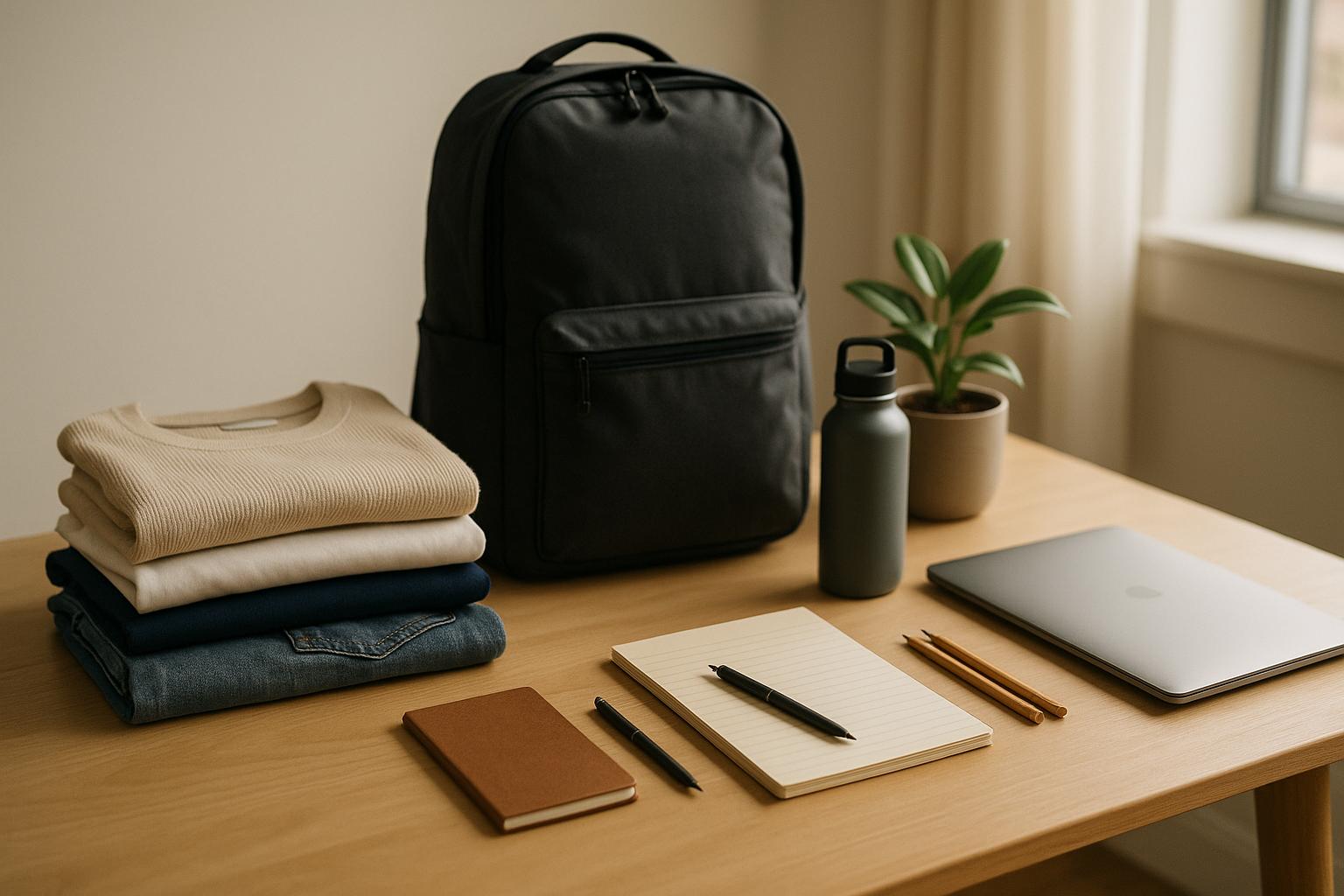
Moving into a coliving space means packing light and smart. Most essentials like furniture, kitchen tools, and cleaning supplies are already provided. Your focus should be on personal items and compact necessities that fit limited storage. Here’s what you’ll need:
- Personal Care: Travel-sized toiletries, a small medical kit, and quick-drying towels. Check if bedding and towels are provided; otherwise, bring your own.
- Clothing: Pack weather-appropriate, mix-and-match outfits, and limit bulk by using compression bags. Comfortable shoes and a few social outfits are key.
- Tech: Laptop, chargers, noise-canceling headphones, and a power strip. Keep cords and accessories neatly organized.
- Kitchen Basics: A reusable water bottle, personal utensils, and small food containers. Add compact, multipurpose tools if needed.
- Documents: ID, rental agreement, insurance, and medications in a waterproof folder with digital backups.
- Smart Packing: Use multipurpose items like a yoga mat or convertible clothing. Ship bulky items or use vacuum-sealed bags to save space.
Before packing, confirm what’s already included in your coliving space. This ensures you avoid duplicates and bring only what’s necessary for a comfortable and organized stay.
What Your Coliving Space Already Includes
Before you start packing, take a close look at your coliving space listing to see what’s already provided. Most spaces cover the basics, but it’s a good idea to double-check with the property manager for specifics. This way, you can avoid lugging along items that are already waiting for you.
Once you’ve got the details, focus on key areas like furniture, kitchen supplies, and storage to fine-tune your packing list.
Checking What Furniture and Items Are Provided
Many coliving spaces come with fully stocked kitchens, so you won’t need to bring much for cooking.
"In the kitchen, you usually have a complete set of general kitchen equipment - pots, pans, plates, and cutlery to meet all your basic cooking requirements without requiring you to bring a whole set of cookware with you."
- Vanmates Accommodation
Leave the bulky cookware at home. However, if there’s a specialty item you can’t live without - like your favorite coffee grinder or that perfect non-stick pan for eggs - it might be worth the suitcase space.
Cleaning essentials are usually taken care of as well. Most coliving setups provide basics like a vacuum, broom, and sometimes communal detergents.
"When it comes to cleaning, most coliving arrangements provide you with basic necessities such as a vacuum, a broom, and sometimes even communal detergents."
- Vanmates Accommodation
Some properties even offer weekly cleaning services for shared spaces, saving you the hassle of buying extra supplies or managing the upkeep alone.
When it comes to furniture, you’ll typically find the essentials: beds, desks, chairs, and living room seating. Some spaces even provide bedding and towels, though this isn’t guaranteed. It’s always smart to confirm these details in advance - nobody wants to end up without sheets on their first night.
Once you’ve got a handle on what’s included, it’s time to think about storage.
Understanding Shared and Private Storage Options
Your private room will usually come with a closet and a few drawers. In shared spaces, storage is divided among residents, so you’ll likely have a designated shelf in the pantry or a section of the refrigerator. Bathroom shelves and kitchen cabinets are also typically shared, so coordinating with housemates is key.
Many modern coliving spaces offer secure storage options like lockers with digital locks or security monitoring. These might be located in your room, shared areas, or even the building lobby, giving you a safe spot for items you don’t use every day.
When space is tight, vertical storage can be a lifesaver. Think wall hooks, door organizers, and stackable containers. Under-bed storage is another great option for keeping seasonal items handy but out of the way.
Personal Care and Comfort Items
Getting your personal care essentials right can make a big difference when settling into a coliving space. Shared bathrooms and limited storage can be tricky, but if you pack thoughtfully, you can avoid clutter while keeping yourself comfortable and organized.
Toiletries and Bathroom Items
Start with the basics: shampoo, conditioner, body wash, toothbrush, toothpaste, floss, mouthwash, razors, shaving cream, and deodorant. Opt for travel-sized or refillable versions to save space. Don’t forget other essentials like cotton balls, swabs, tissues, feminine products, makeup remover wipes, and hair care items such as a brush, comb, hair ties, dry shampoo, or a hair dryer.
A small personal medical kit is also a good idea. Include items like pain relievers (e.g., Tylenol or Advil), nail clippers, and tweezers. These little things can be lifesavers when you need them.
To keep the shared bathroom harmonious, stick to a minimalist approach - pack only what you’ll use in the next 3–6 months. Avoid the temptation to bring unnecessary "just in case" items that could lead to clutter.
Before packing, check with the coliving property manager for a list of provided items. Some spaces offer shared cleaning supplies or appliances, which can save you valuable luggage space.
Once your bathroom essentials are sorted, move on to ensuring your comfort with bedding and towels.
Bedding and Towels
While most coliving spaces include furniture, bedding and towels are often not provided. Pack a complete set of sheets, one pillow, and a blanket or comforter. For towels, bring at least two bath towels, two hand towels, and a small towel for outdoor activities or emergencies.
To save space, choose quick-drying, compact towels - microfiber options are great for this. If comfort is more important to you and space isn’t an issue, traditional cotton towels are a solid choice.
Having your own bedding and towels means you’ll feel at home right away, without relying on leftovers from previous residents.
Finally, don’t overlook the importance of keeping your essential documents and medications organized.
Documents and Medications
Keep your ID, passport, rental agreement, insurance papers, and visa or work documents in a waterproof folder. Bring any necessary medications, prescriptions, glasses, or contact lenses with you. Replacing these items can take time, so it’s better to have them on hand.
If you have ongoing health conditions or take specialized medications, consider bringing copies of your medical records. While you might not need them immediately, having this information ready can make it easier to establish care with new healthcare providers.
Store these documents in a waterproof, organized folder for easy access in case of emergencies. It’s also smart to create digital backups stored securely in the cloud for added peace of mind, though physical copies are often required for official processes.
Clothing and Accessories
Living in a coliving space often means limited closet space and shared laundry facilities, so a well-thought-out wardrobe is essential. Every piece you pack should earn its spot by being practical and versatile. The goal? A wardrobe that fits your lifestyle and the available storage.
Weather-Appropriate Clothing
Before packing, take a close look at your destination's climate. Research average temperatures, rainfall, and seasonal changes so you can pack smart. For instance, if you're heading to a rainy area, bring waterproof layers. If it's a warmer climate, lightweight, breathable fabrics and sun protection are your best friends.
Instead of bulky, single-purpose items, go for a layering system that can adapt to different conditions. A lightweight base layer, a mid-layer like a fleece or cardigan, and a waterproof jacket can handle everything from cool indoor air conditioning to unexpected weather changes.
Footwear matters, too. Comfortable walking shoes are a must for exploring, waterproof boots are handy for wet conditions, and sandals or flip-flops are perfect for shared bathrooms. A good pair of shoes will keep you comfortable, especially when you're on your feet all day.
Don’t forget to pack a few extra layers for indoor temperature changes - coliving spaces can vary in how warm or cool they feel.
Smart Clothing Packing Methods
Start by decluttering your wardrobe. Get rid of anything that doesn’t fit, isn’t your style, or hasn’t been worn in the last year. This step will make packing much easier.
Stick to 2–3 base colors that mix and match well, letting you create multiple outfits with fewer pieces.
Use vacuum bags or compression cubes to store seasonal items separately. These can be tucked under your bed or placed on high shelves, keeping your daily wardrobe tidy and accessible.
Choose clothes made of quick-drying, durable fabrics like synthetic blends or merino wool. Avoid anything that needs special care - think low-maintenance and practical.
Packing cubes or compression bags can help you stay organized during the move and make unpacking at your coliving space a breeze. These tools maximize luggage space and keep everything neat.
Once your wardrobe is streamlined, focus on packing clothes that meet both professional and active needs.
Work and Activity Clothing
Tailor your wardrobe to your daily routine. If you work remotely, you’ll likely need more casual, comfy clothes and fewer formal ones. If formal attire is part of your lifestyle, go for wrinkle-resistant pieces that travel well.
Activewear is another essential. Pack moisture-wicking shirts, leggings or athletic shorts, and supportive shoes for workouts or outdoor adventures.
Don’t overlook the social side of coliving. Bring a few nicer outfits for dinners, housemate gatherings, or networking events. While you don’t need formalwear unless it’s part of your lifestyle, having options beyond loungewear will help you feel prepared for different situations.
If you have hobbies or specific activities in mind, pack only the essentials for those. You can always buy specialized gear locally once you’ve settled in.
Lastly, think about the laundry setup. If you have easy access to washing machines, you can pack fewer items and do laundry more often. But if laundry is expensive or hard to come by, pack enough clothes to stretch out the time between washes.
Technology and Work Setup
Setting up your tech for a shared living space requires a balance between functionality and efficiency. With limited room, every device and accessory should serve a clear purpose.
Electronics and Accessories
Your laptop is your main tool, but it’s the extras that ensure everything runs smoothly. Make sure to pack a reliable laptop charger - consider bringing a backup if your work depends heavily on your device. USB-C chargers are increasingly universal, which can help cut down on the number of cables you need to carry.
Headphones are a must in shared spaces. Whether you’re on video calls, enjoying music, or simply trying to block out noise, invest in a good pair with noise-canceling capabilities. Over-ear headphones tend to provide better sound isolation, while earbuds are easier to pack.
A power strip with surge protection and multiple outlets, including USB ports, is a smart addition. Depending on your destination, you might need a universal adapter - check plug types and voltage requirements in advance.
Keep your essential cables and adapters (like HDMI, USB, or dongles) organized in a small pouch. A portable phone charger or power bank is also handy for keeping your devices powered during long outings or while working remotely from a café.
Organization Tools for Small Spaces
Shared living requires keeping your workspace tidy and efficient. Use Velcro ties and cable clips to manage cords neatly. Foldable storage bins are great for keeping accessories out of the way when not in use. A desk organizer or drawer divider can help you sort smaller items like earbuds, chargers, and adapters.
For added convenience, adhesive cable clips or a cable tray can keep cords from tangling. A lockbox is a good idea for securing valuable items, especially in shared spaces. If you need to elevate your laptop, opt for a foldable laptop stand - it’s lightweight, compact, and easy to store.
These tools not only keep your workspace organized but also create a cleaner, more efficient shared environment.
Daily Carry Items
Choose a padded, water-resistant backpack with compartments to store your laptop, cables, and chargers. A versatile bag is ideal, whether you’re heading to a coworking space, taking a day trip, or running errands. For lighter travel, a laptop sleeve offers extra protection and easily fits into another bag.
Portable storage devices, like an external hard drive or a high-capacity USB drive, are great for backups and extra storage without relying entirely on the cloud. A tech pouch can help keep your daily essentials - earbuds, charging cables, portable chargers, and dongles - organized and easy to access. When packing, aim for lightweight and compact options to reduce bulk and make your daily carry more manageable.
Kitchen Items for Shared Spaces
Navigating a shared kitchen means being prepared with the right personal items to make your experience smooth and efficient. While most coliving spaces come equipped with basic appliances like refrigerators, stoves, and microwaves, you'll need to bring your own essentials for daily use and food storage.
Personal Kitchen Items
Start with a reusable water bottle. Stainless steel options, such as Hydro Flask or YETI, are great for keeping your drinks hot or cold for hours while also cutting down on plastic waste. Choose one with a wide mouth for easy cleaning and the convenience of adding ice.
An insulated travel mug is another must-have, especially for coffee or tea lovers. Look for mug from brands like Contigo or Zojirushi. These mugs are spill-proof and compact enough for commutes or busy mornings.
A personal utensil set is essential for shared spaces. Carry a fork, knife, spoon, and even chopsticks if you use them often. Bamboo or stainless steel sets are durable, come in travel-friendly cases, and ensure you always have clean utensils on hand.
For food storage, glass containers like Pyrex are a top choice. They’re ideal for keeping groceries fresh, reheating meals, and avoiding the odors and stains that plastic containers often pick up. Opt for rectangular shapes - they stack neatly in shared refrigerators without hogging space. A set of 3-4 containers in varying sizes is usually enough to cover your needs.
A compact cutting board, made of bamboo or plastic, is another handy addition. It provides a clean surface for food prep and helps you avoid relying on shared cutting boards, which may not always be properly cleaned.
Space-Saving Kitchen Tools
Once your personal essentials are packed, consider tools that save space while still serving multiple purposes.
Collapsible silicone containers are a game-changer for storage. Brands like Stasher offer leak-proof bags that work for both storing and cooking, while collapsible bowls and measuring cups flatten down to save valuable cabinet and luggage space.
A multipurpose can opener is another smart pick. Look for one that also functions as a bottle opener or small knife. Swiss Army-style kitchen tools are compact and combine several functions into one handy device.
Nesting bowls and measuring cups are perfect for shared kitchens. They fit inside each other, saving space while still being versatile. A set with a 2-3 quart largest bowl is ideal - not too big to dominate storage but large enough for mixing or serving.
If you like to keep your favorite spices on hand, a compact spice container set is a great solution. Magnetic spice jars can stick to the fridge, or small labeled containers can fit neatly in a drawer organizer. Stick to all-purpose spices like garlic powder, paprika, and Italian seasoning to cover a variety of dishes.
Silicone trivets and pot holders are lightweight and fold flat, making them easy to store. They’re perfect for protecting countertops and your hands during cooking, and they’re far less bulky than traditional oven mitts.
Finally, if you’re a coffee enthusiast, consider a French press or pour-over maker. These are compact, easy to store, and give you control over your brew. A 12–16 oz French press is just the right size for one or two cups and takes up minimal space in a shared kitchen.
Smart Packing and Multi-Purpose Items
When it comes to coliving, making the most of limited space is a top priority. Every item you bring should earn its place by serving multiple functions, helping you keep your belongings minimal while maximizing their utility in a shared living environment.
Items That Serve Multiple Purposes
Packing smart means choosing items that can handle different tasks throughout the day. Opt for furniture and accessories that can pull double - or even triple - duty. For instance, a storage ottoman can act as extra seating, hidden storage, and even a coffee table or footrest. Convertible clothing is another game-changer. Think of a blazer that transitions effortlessly from a business meeting to a night out, or pants that work for both the office and casual weekends. Even your smartphone is a multitasking marvel, replacing a camera, calculator, flashlight, and more.
"Home is no longer merely the place we go at the end of the day to relax: It's the office, school, restaurant, movie theater, and gym, and often many of these things at the same time." - Elle Decor
Multipurpose items can also enhance your fitness and leisure routines. A quality yoga mat, for example, can double as workout equipment and provide extra cushioning when you need to sit on the floor. Accessories like scarves or sarongs are equally versatile - they can serve as a fashion statement, a light blanket, an impromptu cover-up, or even a makeshift bag. These small but flexible items pack a lot of value without taking up much space.
Handling Large Items
Dealing with bulkier items requires a bit of strategy. Start by wearing your heaviest clothes and shoes during your move to save space in your luggage. Strategic layering is a simple way to reduce volume and leave more room for essentials.
For items that are just too bulky to pack efficiently, shipping them separately can be a smart solution. Seasonal clothing, books, or larger electronics can often be sent ahead, making your move much easier. Vacuum-sealed storage bags are another lifesaver, compressing bulky bedding or outerwear to free up precious space.
Modular luggage systems, like nestable suitcases or backpacks with detachable daypacks, add flexibility to your packing process. Timing your move can also make a difference - if you're relocating during a specific season, pack light and plan to buy season-specific items locally. Finally, digital alternatives such as e-books and cloud storage can replace physical books and documents, cutting down on bulk and keeping your load lighter.
Moving and Packing Tips
First-Day Bag
Think of your first-day bag as your lifeline for the first 24–48 hours in your new home. Keep it close during the move - you’ll be glad you did.
Start with the essentials: pack travel-sized toiletries like a toothbrush, toothpaste, shampoo, soap, deodorant, and a comb. If you wear glasses or contact lenses, include those too. Toss in a small first aid kit with bandages, pain relievers, and antiseptic wipes, along with some toilet paper and shower shoes - trust me, you’ll thank yourself later.
Next, pack a complete change of clothes. Don’t forget the basics like underwear and socks. Having these items handy will make your first night in your new place much more comfortable.
Conclusion: Pack Smart for Coliving Success
Moving into a coliving space is a chance to simplify your life and focus on what truly matters.
Before you start packing, take time to understand what the space already provides. This helps you avoid bringing unnecessary items and lets you focus on adding personal touches that make the space feel like home.
Use the move as an opportunity to declutter. Go through your belongings and ask yourself if each item has a clear purpose in your new shared environment. If it doesn’t, it’s probably best to leave it behind. This step not only lightens your load but also helps you adapt to a more streamlined lifestyle.
When deciding what to bring, think about items that can serve more than one purpose. A laptop that doubles as your entertainment hub, versatile clothing that works for both work and leisure, and multi-use kitchen tools are all great choices for maximizing functionality in a smaller space.
FAQs
What should I do if bedding and towels aren’t provided in the coliving space?
If your coliving space doesn’t provide bedding and towels, it’s smart to pack your own. Check the listing details carefully or reach out to the landlord before moving in to confirm what’s included. Sometimes, these essentials might be available for an extra fee, so asking ahead of time can save you from unexpected hassles.
What are the best ways to maximize storage in a coliving space?
Maximizing storage in a coliving space takes a bit of planning and some clever ideas. One of the best tricks is to use vertical space - think hooks for jackets and bags, floating shelves for small items, or over-the-door organizers for toiletries. These simple additions can help you keep things off the floor and within easy reach.
Another game-changer is multi-functional furniture. Beds with built-in drawers or foldable desks can help you save space while still being practical for everyday use.
When it comes to shared storage areas, clear bins and labeled containers are your best friends. They make it easy to find what you need without rummaging through everything. Focus on keeping daily essentials accessible and consider donating or storing items you rarely use. Keeping things tidy and clutter-free ensures the space feels more comfortable and works better for everyone.
What tech essentials should I pack for remote work in a coliving space?
When working remotely in a coliving space, having the right gear can make all the difference. Start with a lightweight laptop that offers excellent battery life - perfect for moving between workspaces. Add noise-canceling headphones to block out distractions and a portable Wi-Fi hotspot to ensure a steady internet connection.
Other handy tools include a webcam for seamless video calls, a portable monitor to give you extra screen space, and a multi-device charging station to keep all your gadgets powered up. With these essentials, you can stay focused and comfortable, even in a shared living setup.